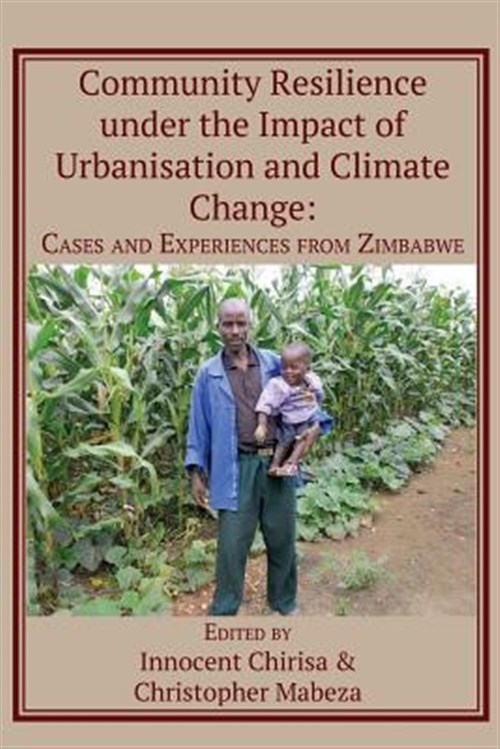
As the world today faces messy problems, what in some circles has been called global weirding, the term resilience has taken centre stage. This is crunch time -as we grapple with the negative effects of both climate change and urbanisation. Some commentators have compared the huge problems we face today to Oom Schalk's proverbial leopard waiting for us in the withaak's shade. Do we endlessly count Oom Schalk's proverbial leopard's spots? This is the question posed by a stellar cast of academics, researchers, and experts whose contributions in this text is a rallying cry for action to build resilience to the challenging impact of urbanisation and climate change. To that end, this volume gives hope about the potential for human agency. Our challenge however, is to re-examine our values, to change our conservation conversation and return to a more wise and holistic understanding of ourselves and our place in the Universe. Perhaps, then only can the obituaries on our demise stay locked in the drawer.
Innocent Chirisa is a professor at the Department of Rural & Urban Planning, University of Zimbabwe. He is currently the deputy dean of the Faculty of Social Studies at the University of Zimbabwe and a Research Fellow at the Department of Urban and Regional Planning, University of the Free State, South Africa. His research interests are systems dynamics in urban land, regional stewardship and resilience in human habitats.
Christopher Mabeza is holds a PhD from the University of Cape Town, South Africa, where he was awarded an Andrew Mellon doctoral fellowship. He has held a research fellowship at Rhodes University where he did extensive fieldwork in the rural Eastern Cape of South Africa. He is a co-recipient of the Rhodes University Vice-Chancellor's Distinguished Award for Community Engagement, 2017. Mabeza is an independent consultant who is very passionate about the impacts of climate change on rural development.