Synopsis
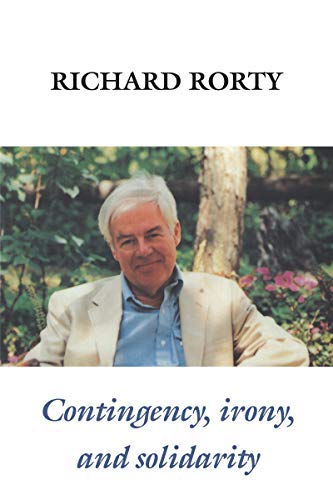
A major American philosopher asserts that it is literature, not philosophy, that promotes a genuine sense of human solidarity and ultimately, the advancement of liberal goals through the social consciousness it raises.
Reviews
Rorty propounds, and faces squarely the consequences of, a relativistic, non-essentialist view of man and society. For him, attitudes, values, beliefs, and practices are contingent phenomena of a particular time, place, and culture, none of which is inherently better or worse than any other. There is irony in the fact that one can realize this, yet still desire, and work for, "human solidarity" and freedom. How these positions can be reconciled is the subject of this important book, not incidental to which are fascinating discussions of Hegel, Heidegger, Habermas, Nietzsche, Nabokov, Freud, Dickens, and Orwell, among others. This is Rorty at his most stimulating, and he emerges as a major political theorist.
- Leon H. Brody, U.S. Office of Personnel Management Lib., Washington, D.C.
Copyright 1989 Reed Business Information, Inc.
"About this title" may belong to another edition of this title.