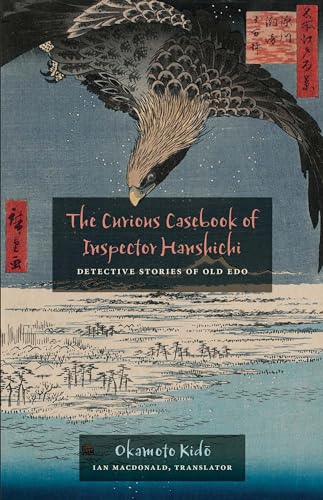
"That year, quite a shocking incident occurred. . . ." So reminisces old Hanshichi in a story from one of Japan’s most beloved works of popular literature, Hanshichi torimonochô. Told through the eyes of a street-smart detective, Okamoto Kidô’s best-known work inaugurated the historical detective genre in Japan, spawning stage, radio, movie, and television adaptations as well as countless imitations. This selection of fourteen stories, translated into English for the first time, provides a fascinating glimpse of life in feudal Edo (later Tokyo) and rare insight into the development of the fledgling Japanese crime novel.
Once viewed as an exclusively modern genre derivative of Western fiction, crime fiction and its place in the Japanese popular imagination were forever changed by Kidô’s "unsung Sherlock Holmes." These stories―still widely read today―are crucial to our understanding of modern Japan and its aspirations toward a literature that steps outside the shadow of the West to stand on its own.
"Kido Okamoto (1872-1939) began writing short stories and kabuki playsin his early twenties while serving as a newspaper drama critic. In 1908 he achieved overnight acclaim with Shuzenji monogatari (The Tale ofShuzenji), a kabuki play about the 13th-century shogun Minamoto Yoriie.Over the next ten years, Okamoto produced over 70 plays. In 1916 hebegan serialization of Hanshichi torimonocho (tr. The Curious Casebookof Inspector Hanshichi), for which he is best remembered today. Okamotowrote 196 plays, 30 serialized novels, 100 feature articles, and 68stories in the Inspector Hanshichi series, as well as numeroustranslations, essays, and scholarly writings. He became the firstplaywright named to the Imperial Arts Academy."
"Ian M. MacDonald was born in Washington, D.C. He is anaward-winning translator of Japanese fiction and nonfiction and holds adoctorate in Japanese literature from Stanford."