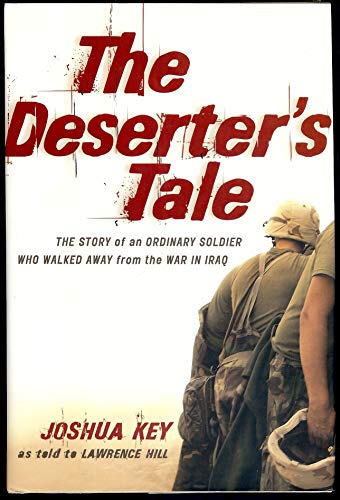
In the first ever memoir from a young soldier who deserted from the war in Iraq, Joshua Key offers a vivid and damning indictment of what we are doing there and how the war itself is being waged. Key, a young husband and father from a conservative background, enlisted in the Army in 2002 to get training as a welder and lift his family out of poverty. A year later, Key was sent to Ramadi where he found himself participating in a war that was not the campaign against terrorists and evildoers he had expected. He saw Iraqi civilians beaten, shot, and killed for little or no provocation. Nearly ever other night, he participated in raids on homes that found only terrified families and no evidence of terrorist activity. On leave, Key knew he could not return so he took his family underground, finally seeking asylum in Canada. The Deserter’s Tale is the story of a patriotic family man who went to war believing unquestioningly in his government’s commitment to integrity and justice, and how what he saw in Iraq transformed him into someone who could no longer serve his country.
*Starred Review* In 2002, Key, a good ol' Oklahoma boy with a wife and two children (but no money), enlisted in the U.S. Army so he could learn a trade and provide for his family. He was assured that he would be sent to a "non-deployable" military base: he would never see combat. Instead, he was sent to Iraq to hunt for terrorists, a mission that involved beating civilians, kidnapping innocents, and destroying homes and families (all of which he relates in precise, damning detail). Stateside, on a two-week furlough, Key decided he couldn't go back to Iraq, couldn't participate in what he decided were mindless atrocities being committed in the name of world peace. Thus, he did what so many Vietnam protestors did: he took his family to Canada, where he now lives, a wanted man in his own country. This memoir, which can fairly and accurately be called a searing indictment of America's "war on terror," is vividly written ("Hayes slammed her in the face with the stock of his M-16"), but as difficult as it sometimes can be to read, we respect Key's courage to tell the story without sugarcoating. The book is timely, important, and haunting. David Pitt
Copyright © American Library Association. All rights reserved