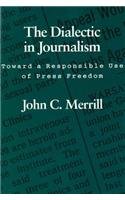
The Dialectic in Journalism (Paperback)
John C. Merrill
Sold by Grand Eagle Retail, Bensenville, IL, U.S.A.
AbeBooks Seller since October 12, 2005
New - Soft cover
Condition: New
Ships within U.S.A.
Quantity: 1 available
Add to basketSold by Grand Eagle Retail, Bensenville, IL, U.S.A.
AbeBooks Seller since October 12, 2005
Condition: New
Quantity: 1 available
Add to basketPaperback. A main intent of this book is to show how freedom relates to ethics in journalism and at the same time to discuss how a number of other contraries or antinomies are unsuitable in the real world of journalism. I also hope to demonstrate how a synthesis, a position near the Aristotelian Golden Mean, is the best solution to many of the problems of mass communication. We need to form the habit of thinking dialectically about many of our journalistic problems realizing that a clash of opposing positions is not harmful but useful in the constantly changing world of journalism. - From the IntroductionOver the past thirty years, John C. Merrill has produced what many critics consider an essential body of writing on the relatedness of journalism and philosophy. He speaks with authority for a growing group of scholars who are looking behind the product of journalism for the ideologies that create them. His latest work, The Dialectic in Journalism,is an ambitious and comprehensive examination of the forces at work throughout the press.The book focuses on two important and timely issues: journalistic license and social control, or in a larger sense, freedom and responsibility. What are the just limits of the press? Where may libertarians and statists of the press find common ground? How do journalists convert the world into the word?Merrill places sweeping questions such as these in the context of the Western intellectual tradition. Beginning with the Heraclitean observation that reality is constantly changing, he traces the development of the dialectic through Plato and Aristotle to Rousseau, Spinoza, Nietzsche, and Hegel. Merrill connect these thinkers with many of the problems facing the journalistic community today. He uses the Hegelian dialectic to suggest that a moderating force is at work in the contemporary journalism. He shows that the tensions created between the concept of freedom of expression and necessity of restraint resolve themselves in a synthesis of ""social responsibility.""Readers familiar with Merrill's earlier works will find in this new book the same strong concern for the ethical foundations of journalism. The Dialectic in Journalism is sufficiently rigorous philosophically that it sustains a close critical reading, and yet the general reader will find it straightforward and lucid. Journalists will want to read this book to gain new insight into the frequently unexamined philosophy of their trade, and the public will profit from a broader understand of the force that plays a central role in shaping our view of the world. A main intent of this book is to show how freedom relates to ethics in journalism and at the same time to discuss how a number of other contraries or antinomies are unsuitable in the real world of journalism. Shipping may be from multiple locations in the US or from the UK, depending on stock availability.
Seller Inventory # 9780807118894
“A main intent of this book is to show how freedom relates to ethics in journalism and at the same time to discuss how a number of other contraries or antinomies are unsuitable in the real world of journalism. I also hope to demonstrate how a synthesis―a position near the Aristotelian Golden Mean―is the best solution to many of the problems of mass communication. We need to form the habit of thinking dialectically about many of our journalistic problems realizing that a clash of opposing positions is not harmful but useful in the constantly changing world of journalism.” ―From the Introduction
Over the past thirty years, John C. Merrill has produced what many critics consider an essential body of writing on the relatedness of journalism and philosophy. He speaks with authority for a growing group of scholars who are looking behind the product of journalism for the ideologies that create them. His latest work, The Dialectic in Journalism,is an ambitious and comprehensive examination of the forces at work throughout the press.
The book focuses on two important and timely issues: journalistic license and social control, or in a larger sense, freedom and responsibility. What are the just limits of the press? Where may libertarians and statists of the press find common ground? How do journalists convert the world into the word?
Merrill places sweeping questions such as these in the context of the Western intellectual tradition. Beginning with the Heraclitean observation that reality is constantly changing, he traces the development of the dialectic through Plato and Aristotle to Rousseau, Spinoza, Nietzsche, and Hegel. Merrill connect these thinkers with many of the problems facing the journalistic community today. He uses the Hegelian dialectic to suggest that a moderating force is at work in the contemporary journalism. He shows that the tensions created between the concept of freedom of expression and necessity of restraint resolve themselves in a synthesis of “social responsibility.”
Readers familiar with Merrill’s earlier works will find in this new book the same strong concern for the ethical foundations of journalism. The Dialectic in Journalism is sufficiently rigorous philosophically that it sustains a close critical reading, and yet the general reader will find it straightforward and lucid. Journalists will want to read this book to gain new insight into the frequently unexamined philosophy of their trade, and the public will profit from a broader understand of the force that plays a central role in shaping our view of the world.
"About this title" may belong to another edition of this title.
We guarantee the condition of every book as it¿s described on the Abebooks web sites. If you¿ve changed
your mind about a book that you¿ve ordered, please use the Ask bookseller a question link to contact us
and we¿ll respond within 2 business days.
Books ship from California and Michigan.
Orders usually ship within 2 business days. All books within the US ship free of charge. Delivery is 4-14 business days anywhere in the United States.
Books ship from California and Michigan.
If your book order is heavy or oversized, we may contact you to let you know extra shipping is required.
| Order quantity | 6 to 16 business days | 6 to 14 business days |
|---|---|---|
| First item | US$ 0.00 | US$ 0.00 |
Delivery times are set by sellers and vary by carrier and location. Orders passing through Customs may face delays and buyers are responsible for any associated duties or fees. Sellers may contact you regarding additional charges to cover any increased costs to ship your items.