About this Item
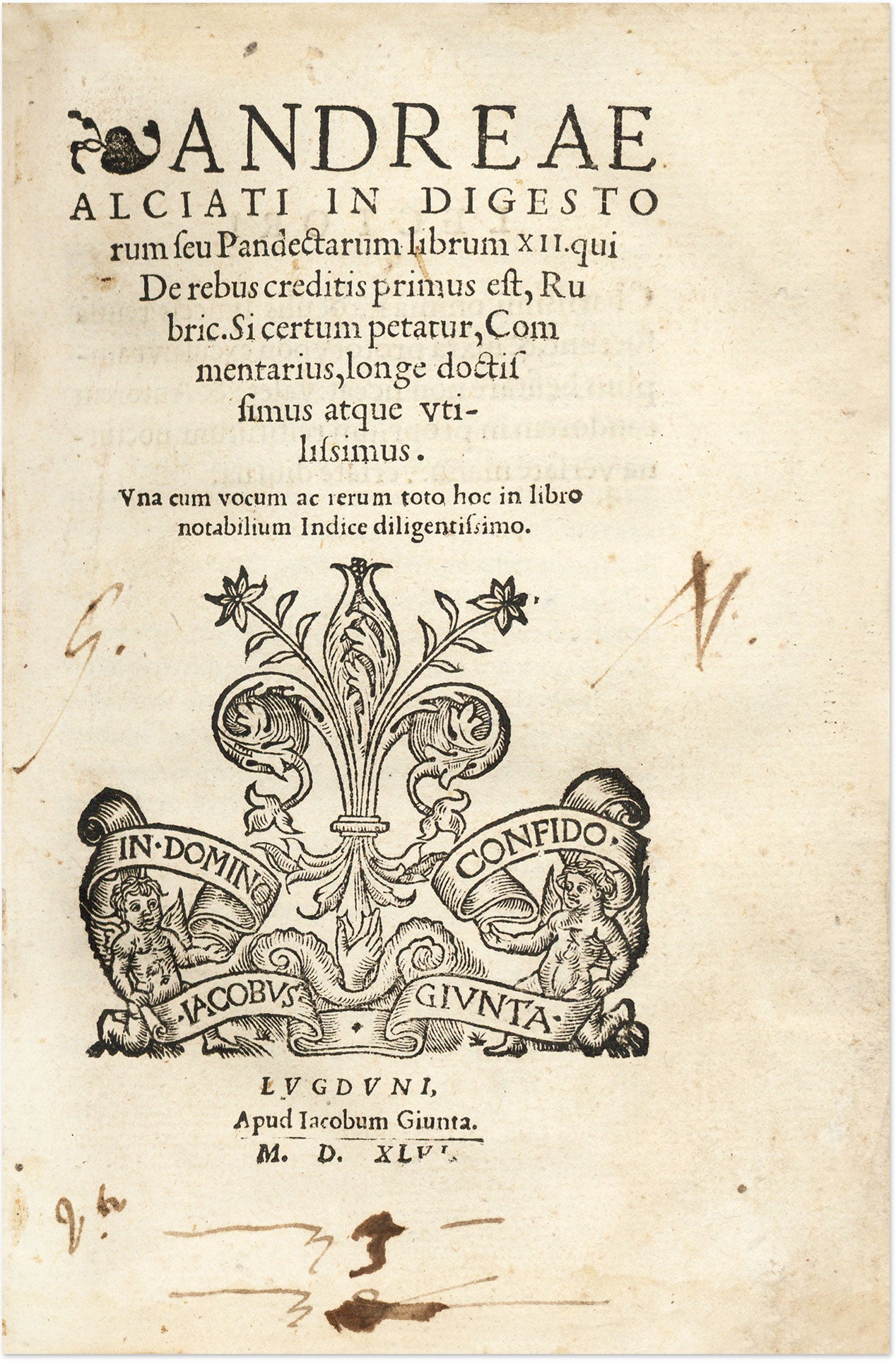
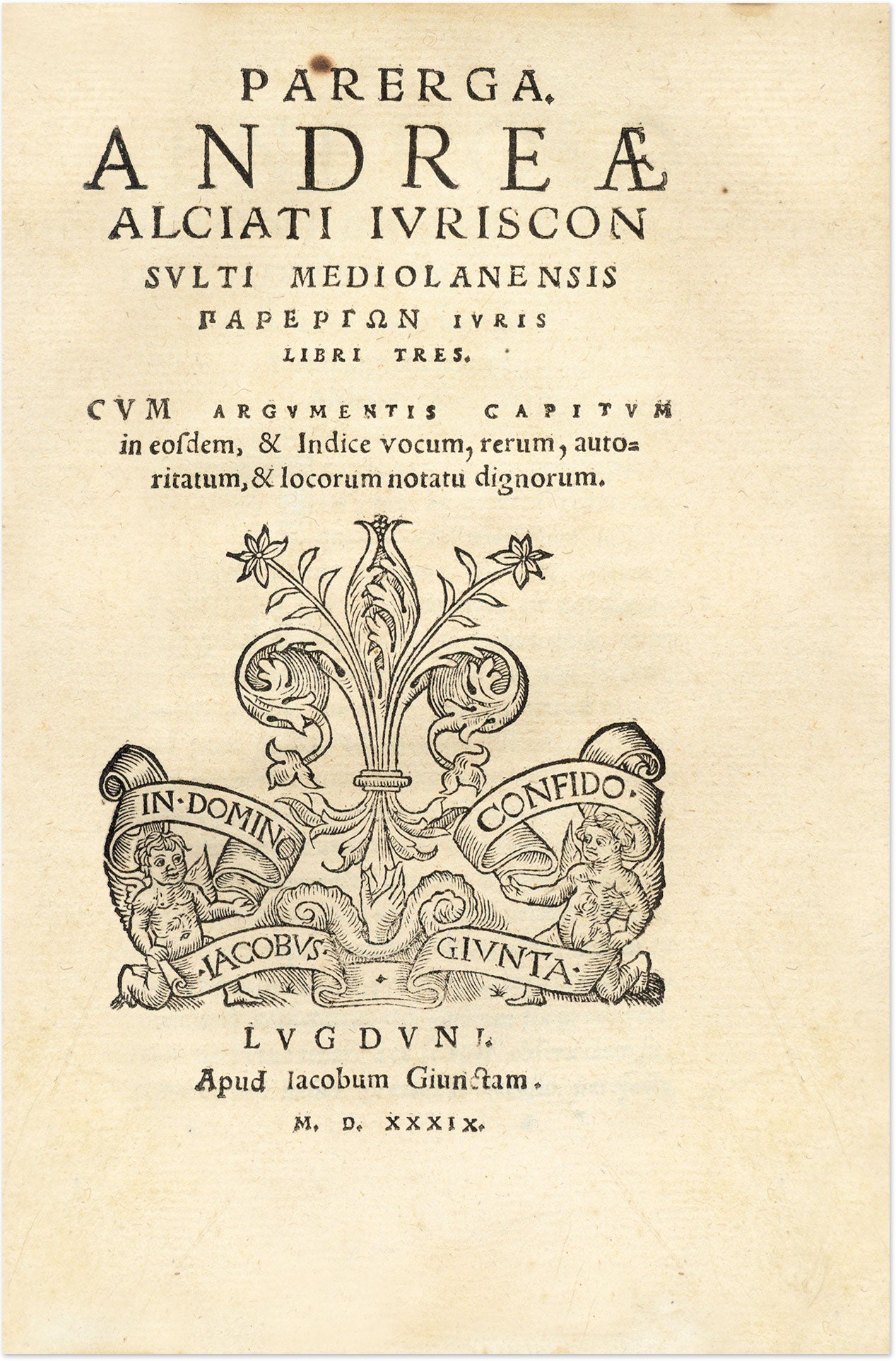
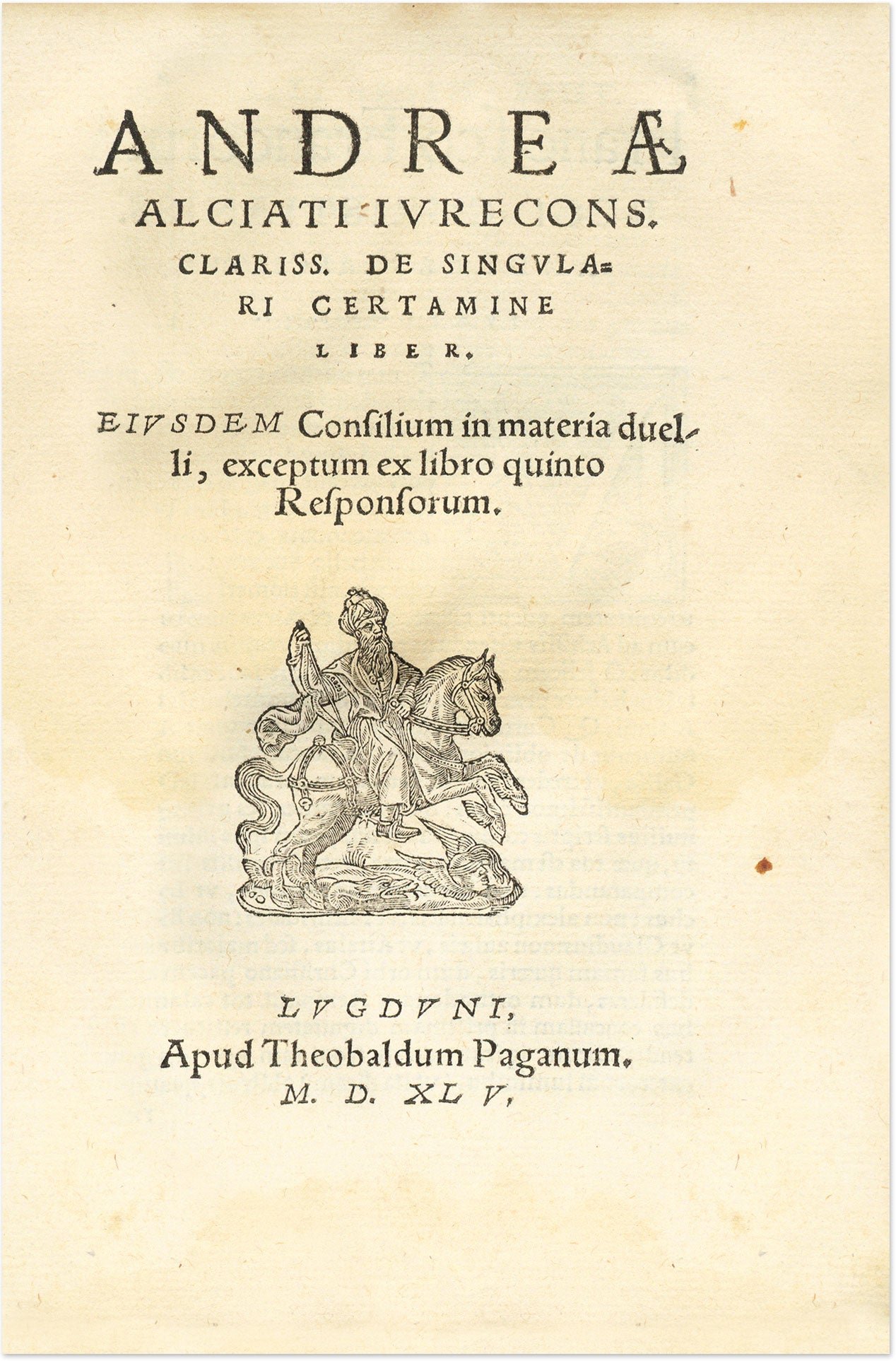
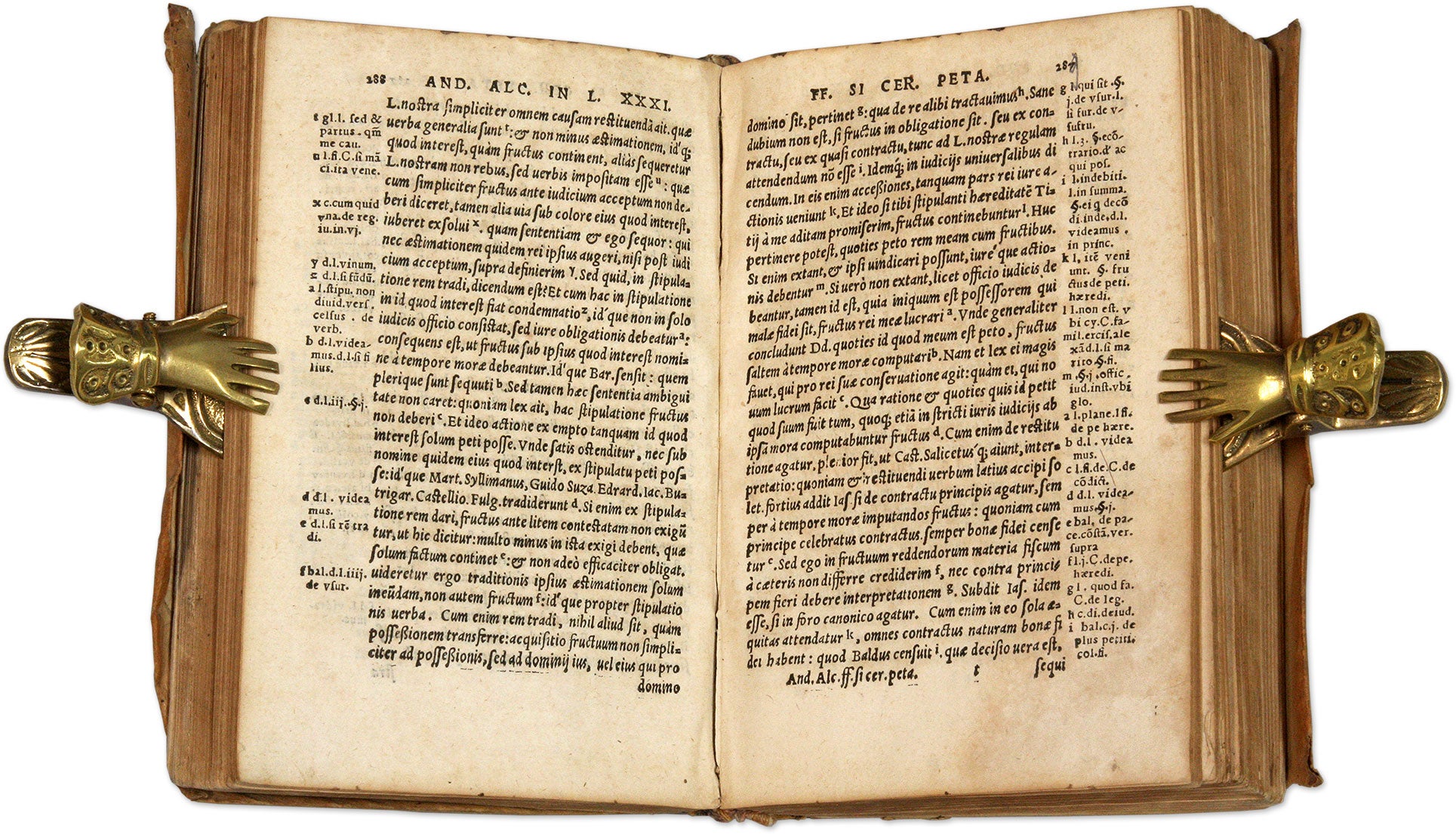
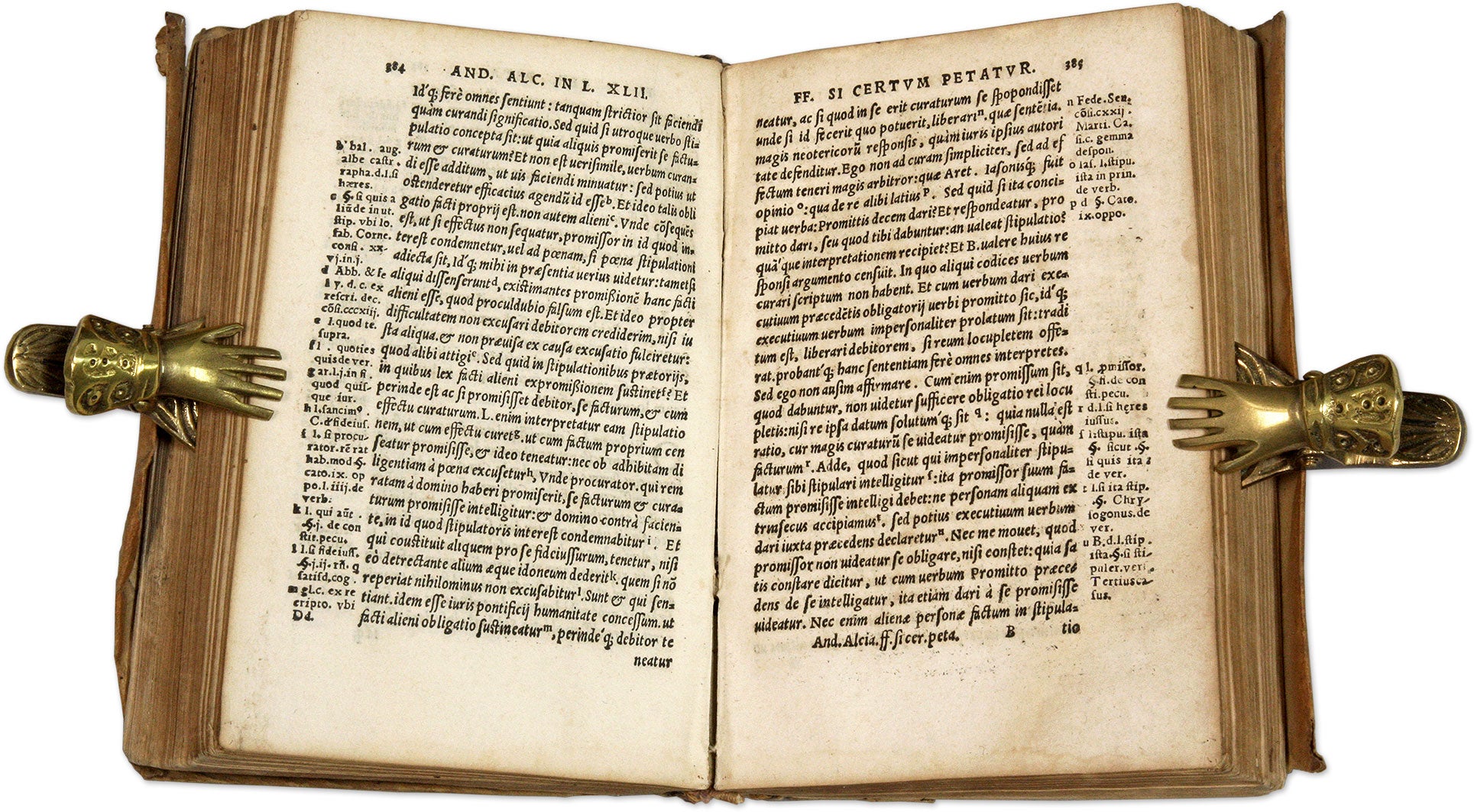
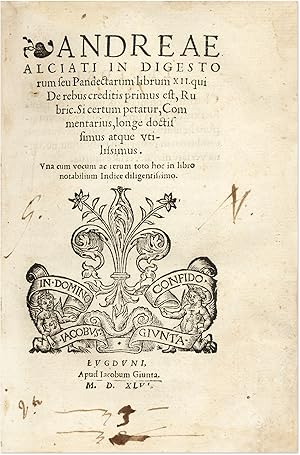
3 titles: Lyons: 1539,1545,1546. Three Scarce Titles by Andrea Alciati, Featuring His Landmark Treatises on Roman Law, Philology, and the Renaissance Code of Dueling Alciati, Andrea [1492-1550]. In Digestorum Seu Pandectarum Librum XII qui De Rebus Creditis Primus est, Rubric. Si Certum Petatur, Commentarius: Longe Doctissimus Atque Utilissimus: Una cum Vocum ac Rerum Toto hoc in Libro Notabilium Indice Diligentissimo. Lyons: Apud Iacobum Giunta, 1546. 387, [21] pp. [Bound with] Alciati, Andrea. Parerga: Andreae Alciati Iurisconsulti Mediolanensis PARERGON Iuris Libri Tres, Cum Argumentis Capitum in Eosdem, & Indice Vocum, Rerum, Autoritatum, & Locorum Notatu Dignorum. Lyons: Apud Jacobum Giunctam, 1539. [xxxii], 190 pp. [And] Alciati, Andrea. De Singulari Certamine Liber: Eiusdem Consilium in Materia Duelli, Exceptum ex Libro Quinto Responsorum. Lyons: Apud Theobaldum Paganum, 1545. 111, [1] pp. Three titles in one volume. Fourth, second and third editions respectively. Octavo (6-1/4" x 4-1/4"). Contemporary limp vellum, early hand-lettered titles to spine, top edge and front cover, ties lacking. Light soiling, rubbing to extremities with minor wear around spine ends and corners, vellum just beginning to crack through pastedowns. Attractive woodcut printer devices, colophons and decorated initials. Toning and light browning in places, early owner initials to title page of first title, interior otherwise clean. A very good copy of a scarce title. $1,500. * This volume stands as a pristine artifact from the epicenter of the Renaissance legal revolution, capturing the exact moment when classical philology, legal doctrine, and printing technology converged to forge the modern Western legal tradition. Andrea Alciati was the acknowledged architect of mos gallicus, the French style of legal interpretation that decisively fractured the medieval scholastic tradition of mos italicus. For centuries, medieval commentators treated the Roman legal framework of Justinian as an immutable, static scripture, burying the text under layers of dense, abstract glosses. Alciati, a brilliant classicist, shattered this paradigm by arguing that Roman law could not be understood without a deep command of classical philology, history, literature, and Greek. By applying historical-critical methods, he stripped away centuries of medieval comm.
Seller Inventory # 56511
Contact seller
Report this item