
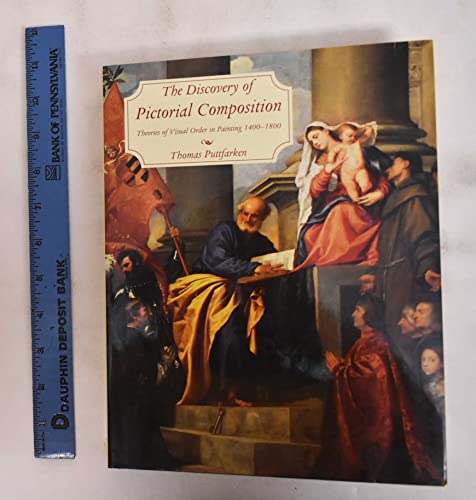
The Discovery of Pictorial Composition: Theories of Visual Order in Painting, 1400-1800
Puttfarken, Thomas
ISBN 10: 0300081561 ISBN 13: 9780300081565
Published by Yale University Press, 2000
Used
Hardcover
From
Antiquariaat Hovingh, Haarlem, Netherlands
Seller rating 5 out of 5 stars

AbeBooks Seller since December 27, 2017
This specific item is no longer available.
About this Item
Description:
Hardcover with dust jacket. Interior of the book in excellent condition. Dust jacket with some small traces of use, but still in good condition. Seller Inventory # 7347 B86
Synopsis:
In this book, Puttfarken traces the changing nature of attitudes towards composition from the early Renaissance to the beginning of the nineteenth century. Using examples as diverse as Giotto, Rembrandt and Poussin, he reveals how artists 'put together' the various elements of their pictures to create an harmonious whole - and how the practice varied from place to place and from era to era (Leonardo's Last Supper, for example, is conceived in a totally different way from, say, Caravaggio's Supper at Emmaus, in which the figures are no longer grouped along the side of the table, facing out towards the spectator, but are grouped, more naturalistically, around the table, some with their backs to us). He examines the significance of the use of frames, perspective, size and location, and shows how analysis of these became incorporated into general theories of art. This stimulating book offers a major contribution to studies in art theory, and will become essential reading for all students and scholars of that field.
About the Author: Thomas Puttfarken is professor of the history and theory of art at the University of Essex, England. He was the author of Roger de Piles's Theory of Art, published by Yale University Press.
"About this title" may belong to another edition of this title.
Bibliographic Details
Title: The Discovery of Pictorial Composition: ...
Publisher: Yale University Press
Publication Date: 2000
Binding: Hardcover
Condition: Very Good
Dust Jacket Condition: Good