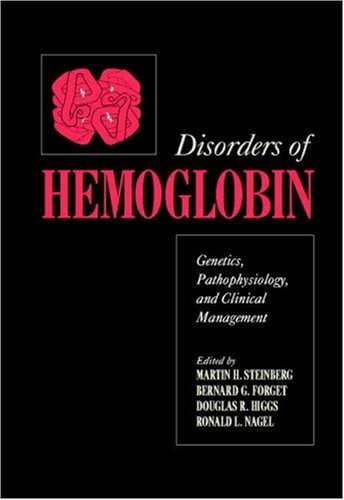
Disorders of Hemoglobin is the first comprehensive reference on the genetic and acquired disorders of hemoglobin in over a decade. It stands as the definitive work on the genetics, pathophysiology, and clinical management of this wide range of disorders. Drs. Steinberg, Forget, Higgs, and Nagel have gathered the absolute world authorities on the science and clinical management of thalassemias, sickle cell disease, and other inherited and acquired hemoglobinopathies to create this authoritative textbook for researchers and clinicians alike. This text is divided into eight distinct sections, and includes coverage of the molecular and genetic basis of hemoglobinopathies and thalassemias, their epidemiology and genetic selection, and the diagnosis and special treatments of ^D*b and ^D*a thalassemias, sickle cell disease, Hb E, unstable hemoglobins, Hb M disorders, and acquired and secondary disorders of hemoglobin. Clinical features of all disorders are anchored to the scientific and pathophysiological events that precede them; providing clinicians with a clear scientific background of the disorders they treat, and scientists with an essential link between their research and its clinical manifestation. Disorders of Hemoglobin is the only single-source reference of its kind for hematologists, internists, pediatricians, clinical investigators, and geneticists worldwide.
Fifteen years ago, H. Franklin Bunn and Bernard G. Forget published their second book on hemoglobin, entitled Hemoglobin: Molecular, Genetic and Clinical Aspects (Philadelphia: W.B. Saunders, 1986). In the first, entitled Hemoglobinopathies (Philadelphia: W.B. Saunders, 1977), they were joined by Helen M. Ranney, the doyenne of hemoglobin studies. In those books, the authors described the length and breadth of hemoglobin, the molecule that ushered in the molecular biologic revolution in clinical medicine. The two books stand as examples of fine writing by experienced physician-scientists who have made extraordinary contributions to the field.
The study of hemoglobin has grown at such a pace that Forget and his colleagues have forgone an attempt to write a similar book. In its place, we have a multiauthored book, Disorders of Hemoglobin: Genetics, Pathophysiology, and Clinical Management, which might be considered the grandchild of the work by Bunn, Forget, and Ranney. The editors themselves are important contributors to the book, and they have marshaled a group of chapter authors who are, for the most part, masters in the field. The first chapter, by Ranney, sets the stage by providing a comprehensive historical perspective. The high quality of the book continues from there. The book is comprehensive and surprisingly up to date, with coverage of current topics and citations of reports that have appeared in journals very recently.
Are there minor points to criticize? Of course there are. It is nearly impossible to prepare a tightly organized, multiauthored textbook that is written by independent experts in a field. In some ways, this is not a textbook but, rather, an organized collection of essays by clinical and basic investigators. Hence, there is overlap among the chapters, the figures are of variable quality, some of the figures are actually duplicated, the writing styles vary from excellent to something far less than excellent, and the book is too heavy to carry easily. In addition, there is nothing on animal models -- a serious deficiency. Nevertheless, this book will be invaluable to experts in the field and extremely useful to medical students and house officers who want a single resource in which to review the clinical aspects of hemoglobin disorders. This book will serve as a binder for the literature on the molecule that put medicine into an entirely new place.
David G. Nathan, M.D.
Copyright © 2001 Massachusetts Medical Society. All rights reserved. The New England Journal of Medicine is a registered trademark of the MMS.