Synopsis
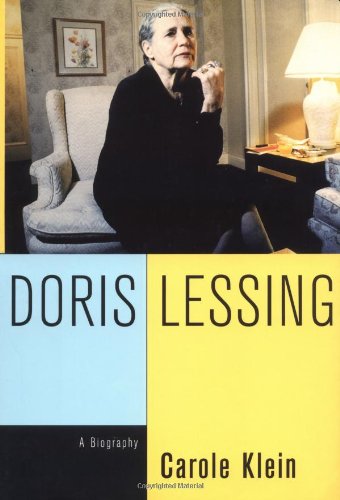
Delves through interviews with Lessing's friends and associates, as well as her autobiographical novels and memoirs, to explore her life and literary career.
Reviews
When the prolific, multifaceted novelist Lessing (Ben; In the World; etc.) heard that several biographies of her were in the works, she wroteA"in self-defense"Atwo well-received books covering her first four decades before this first, disappointing biography could be published. In her own books, Lessing captured the more colorful and exuberant parts of her life: her childhood in Southern Rhodesia, her rebellious adolescence, her two unsuccessful marriages, her anticolonial political radicalism, her affiliation with the Communist Party and her literary debut in London's bohemian, intellectual circles. Klein (Aline; Gramercy Park), after a pallid paraphrased account of Lessing's version, is left to assemble other, less satisfactory sources on the remaining years, which cover Lessing's writings after The Golden Notebook, her experiments with radical psychology and her conversion to Sufism. Klein's interviews with Lessing's ex-friends and former colleagues are largely anonymousAand often filled with memories of her aloofness, irritability or vulnerability. Some are willing to go on record, such as Clancy Sigal, who was, at least in his own opinion, the great love of her life; Klein similarly takes full advantage of Lessing's correspondence with editor Robert Gottlieb. Otherwise, she depends on material from Lessing's previously published interviews and her often autobiographical fiction and nonfiction. Klein's psychological analysis of her subject lags after Lessing's own, without the irony and wit, and her striving for an objective viewpoint results, often, in merely noting Lessing's inconsistencies. Lessing entitled the first volume of her autobiography Under My SkinAwhich is where, for all Klein's research despite Lessing's disapproval, this biography never gets. B&w illus.
Copyright 2000 Reed Business Information, Inc.
"The older I get the more secrets I have," Lessing wrote in Under My Skin (1996). She says she wrote that book and her other memoirs out of self-defense because she knew others were writing about her life. She refused to have anything to do with Klein, the author of this biography. However, Klein has interviewed a host of Lessing's friends, enemies, colleagues, critics, and contemporaries, and she's read Lessing's work with intelligence and subtlety, even while acknowledging Lessing's fury at those who look for autobiographical connections in her fiction. There's no fury here, and no fervent admiration either, just an intelligent account of a passionate writer who broke new ground in writing about contemporary women, sex, and politics. Klein does an excellent job of pointing out the inconsistencies and the connections in Lessing's life and art, including her family relationships (she loathed her own rejecting mother, then later abandoned her own children). Fans will read this for the gossip as much as the thoughtful analysis; then they'll be inspired to go back to The Golden Notebook (1981). Hazel Rochman
Copyright © American Library Association. All rights reserved
"About this title" may belong to another edition of this title.