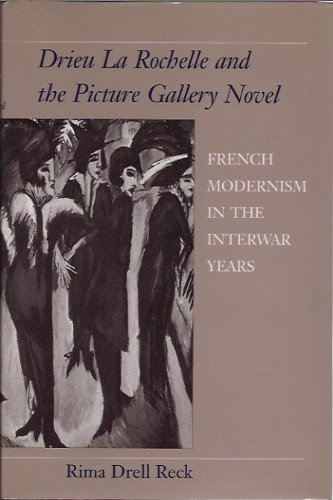
Synopsis
Pierre Drieu La Rochelle, whose status as a political untouchable has obscured his contribution to literature, was a major figure in the modernist movement. He introduced the French reading public to the works of Hemingway, Lawrence, Huxley, and Malraux. He was the first prominent semiotic analyst of the music halls and circuses of Paris. And he wrote a widely acclaimed masterpiece, Gilles, a realist collage of life in the twenties and thirties. In the first cohesive reading of all of Drieu's fiction, Rima Drell Reck takes a giant step toward rehabilitating the artistic reputation of this complex figure. Reck's ground-breaking study illuminates Drieu's work without ignoring the profascist sympathies that led to its suppression. Reck insists that Drieu's novels be read for the first time in their artistic, rather than political context. Within that context, she identifies complex visual roots and technical innovations. Drieu was sustained by an intense relationship to the works of Warreau, Ingres, Delacroix, Dammier, Manet, Seurat, Van Gogh, and Picasso. Reck uses Drieu's meditations on art and his extensive art criticism to interpret his novels. She traces his movement toward The light of the painters, which led to the emergence of his signature style in his eighth novel, the 1939 Gilles. Reck labels Gilles the picture gallery novel and describes Drieu's startling fusion of realism, caricature, theatricality, cubism, surrealism and rhetoric. Reck's lucid critical narrative, illustrated by thirty of the artworks discussed, recommends Drieu's vision of life as a way to understand the special character of the brilliant, troubled world of the interwar years.
"About this title" may belong to another edition of this title.