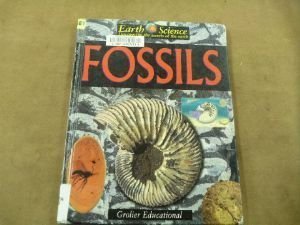
Gr 6-10-This set is well suited for students researching brief reports but too dry for those pursuing personal interests. Each volume presents one major area of study including minerals, rocks, fossils, earthquakes/volcanoes, plate tectonics, and human use of earth resources. Given the close relationship between some of these topics (e.g., plate tectonics and earthquakes and volcanoes), there is surprisingly little overlap. One major omission from the Landforms volume is mention of how river valleys are formed. On the other hand, Geological Time presents an exceptionally clear account of how scientists learn geological history by observing rock formations. Like many reference sets, this one relies heavily on clear, informative, and colorful photographs and diagrams to convey important information. Unfortunately, the illustrations are not always well keyed to the text. The effective, helpful captions are indexed. There is no bibliography or list of sources. The information here is no more detailed than that presented in The World Book Encyclopedia of Science (1999) and The New Book of Popular Science (Grolier, 2000), both of which are written in a more engaging style. Thus, this is a useful supplement but does not replace those standard works.
Jonathan Betz-Zall, City University Library, Everett, WA
Copyright 2001 Cahners Business Information, Inc.
Gr. 6-10. Grolier's eight-volume set offers clearly presented information illustrated with excellent color photographs and diagrams.
Minerals begins with a chapter on the environments where various types are formed, followed by a methodical section on identifying minerals and another on classifying them.
Plate Tectonics discusses how Earth's plates move, what evidence led to this theory, and what occurs at plate boundaries, as well as the nature of shields and hot spots. Topics of the other six volumes are treated with equal discernment. Well organized for students researching topics in the earth sciences, this set will be useful in reference and circulating collections. Each volume has an extensive glossary, including terms used in all the books, and a set index with an example of how to use it.
Carolyn PhelanCopyright © American Library Association. All rights reserved