Synopsis
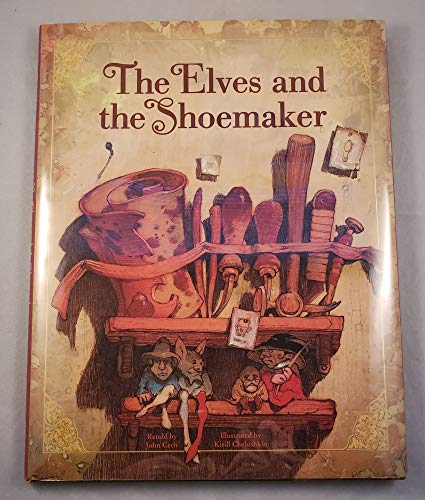
Rich illustrations enhance this timeless fairy tale about an old, hardworking cobbler and his group of devoted, talented elves who help him get through hard times. 10,000 first printing.
Reviews
Grade 1–4—This strikingly illustrated and well-written retelling of the tale begins, "A long, long time ago, when shoes were still made by shoemakers and not by machines in factories, a shoemaker and his wife found themselves in very hard times." The shoemaker, whose deeply wrinkled face exudes tiredness and despair, retires for the night, leaving the pieces for one pair of shoes. He awakens the next day to find a "marvelous" pair of shoes, and each day, the number of finished shoes increases. One night the grateful couple watches the elves tiptoe out "like two whispers in the wind" and determine to reward them. Arresting paintings reveal multiple details: the shoemaker has a long pipe in his mouth, shoes and balloons float around in the air, the first customer dressed in an all-white suit, boots, and top hat arrives at the shop in a fancy jalopy with white walled wheels. The well-known Moscow artist plays with perspective and shadows to add layers of interest to the art. Some children may enjoy perusing these details; others may be put off by their slightly eerie look. This book deserves a place in larger folklore collections.—Kirsten Cutler, Sonoma County Library, CA
Copyright © Reed Business Information, a division of Reed Elsevier Inc. All rights reserved.
In Cech's retelling of Grimm's tale, a poor shoemaker and his wife discover two bedraggled elves cobbling new shoes for their shop each night. After the big folk leave out new clothes for their little benefactors, the delighted elves dance away, leaving nothing behind them but good fortune for the kind couple. Cech's appended note discusses the background of the tale and ends with a quote from Einstein on reading fairy tales to children. Though the telling is smooth and traditional, the illustrations by Russian artist Chelushkin are dark, dense, and a bit puzzling, with fantastic figures sometimes buzzing across the scenes and half-seen figures hiding in shadows. Color is used with restraint in the relatively drab scenes. Near the end of the book, two monochromatic ink drawings in a different, more traditional style appear within the broader, more painterly compositions. Not the most child-friendly interpretation of the tale, this artistically accomplished, imaginative version is recommended for larger collections. Carolyn Phelan
Copyright © American Library Association. All rights reserved
"About this title" may belong to another edition of this title.