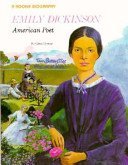
Readers are introduced to Emily Dickinson's family background, childhood in Amherst, Massachusetts, education, friendships, and poetry
Gr 2-3--The likelihood that children will, on their own, become curious about Dickinson's life is minimal. Without the driving force that interest and previous exposure to the poet might bring, Emily Dickinson is more apt to result in confusion than clarity. The refrain ``Emily had to be Emily,'' repeated several times throughout the text, offers little clarification of her choice of lifestyle. Lovely photographs and illustrations in full color and black and white enhance the text, and a few brief quotations from the subject's poetry are included. Michael Bedard's Emily (Doubleday, 1992) gives almost as full a picture of the woman. Robert Louis Stevenson fares better--his life was more straightforward and more readily withstands being pared down to the bare-bones essentials; also, youngsters are more likely to have encountered his work. Greene does an adequate job of relating his experiences to his writing, and occasionally incorporates brief quotations to illustrate a point. The black-and-white and full-color photographs serve nicely to enliven the dry, somewhat choppy text. The vocabulary in both titles is well chosen and in keeping with the goal of providing easy-to-read material.
Linda Greengrass, Bank Street College Library, New York City
Copyright 1995 Cahners Business Information, Inc.