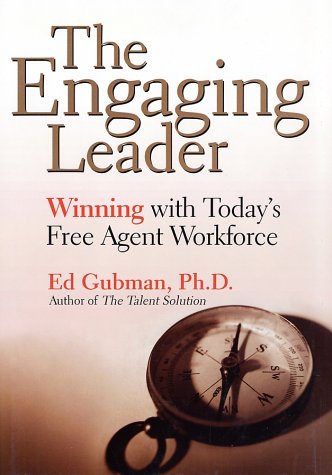
Hold on to your talent! To get the best and keep them, managers should hire and lead like good coaches do.
Business leaders struggling to attract and retain skilled employees can learn valuable lessons from veteran coaches and sports team managers. These pros have developed engaging leadership styles over years of dealing with a shortage of skilled talent, great mobility, and a younger generation demanding greater personal fulfillment.
So how do business leaders engage their employees? Just like winning coaches do: by hiring talented people who fit, setting ambitious goals for winning, and creating chemistry and trust among the team.
Examining the highly successful methods of coaching greats Lou Piniella, Dennis Green, Phil Jackson, Scotty Bowman, and many others, The Engaging Leader helps today's business leaders learn to build on their strengths, focus on the long term potential of employees, hold themselves accountable, take risks, and develop superb communications with team members.
A former partner of a worldwide human-resources consulting firm looks at the state of corporations today, concluding that many businesses are, and will be, failing because of critical people and leader shortages. After all, only one-third of today's workforce is committed to the company they work for, with more than half usually on the lookout for a more challenging, freewheeling, and caring employer. Ever pragmatic, Gubman gives a handful of simple rules to follow, from building a team to realizing goals. Some of his dictates: a leader points to goals for the group, then caters to the needs of top talent. If trust gets you to good, appreciation gets you to great. In large part, sports metaphors illustrate his points, somewhat of a surprise because women dominate the HR profession (and are usually the readers of such books). Throughout, he clearly demonstrates his passion for the subject and for influencing the course of major American companies; in the coming years, statistics--and the Damocles sword of business success--will prove him right. Barbara Jacobs
Copyright © American Library Association. All rights reserved