Synopsis
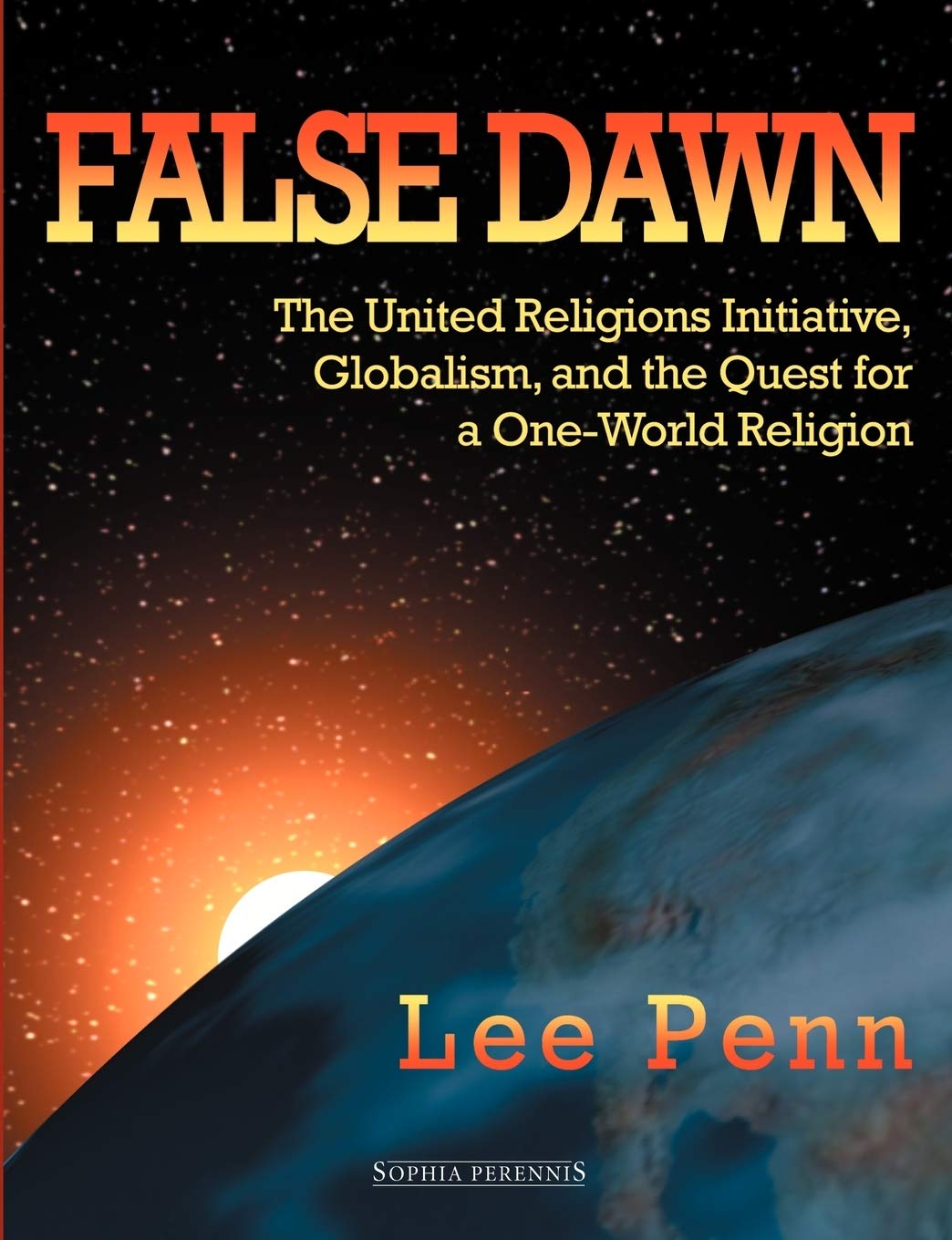
The interfaith movement, which began with the 1893 World's Parliament of Religions in Chicago, has grown worldwide. Although this movement has been largely unknown to the public, it now provides a spiritual face for globalization, the economic and political forces leading us all from nationalism to 'One World'. The most ambitious organization in today's interfaith movement is the United Religions Initiative (URI), founded by William Swing, the Episcopal Bishop of California. Investigative reporter Lee Penn, a Catholic ex-Marxist, exhaustively documents the history and beliefs of the URI and its New Age and globalist allies, the vested interests that support these movements, and the direction they appear to be taking. The interfaith movement is no longer merely the province of a coterie of little-heeded religious idealists with grandiose visions. The URI's proponents have ranged from billionaire George Soros to President George W. Bush, from the far-right Rev. Sun Myung Moon to the liberal Catholic theologian Hans Küng, and from the Dalai Lama to the leaders of government-approved Protestant churches in the People's Republic of China. The interfaith movement, including the URI, is being promoted by globalist and New Age reformers who favor erosion of national sovereignty, marginalization of traditional religions, establishment of 'global governance', and creation of a new, Earth-based 'global spirituality'—in effect, a one-world religion. Therefore, the URI and the interfaith movement are poised to become the spiritual foundation of the New World Order: the 'new civilization' now proposed by Mikhail Gorbachev, the last leader of the Soviet Union. In The Reign of Quantity and the Signs of the Times, French metaphysician Rene Guenon spoke of the 'anti-tradition' (the forces of materialism and secular humanism) finally giving way to the 'counter-tradition' (the satanic inversion of true spirituality), leading to the regime of Antichrist. The 'anti-tradition' weakens and dissolves traditional spiritualities, after which the 'counter-tradition' sets up a counterfeit in their place. Since Guenon's time, as is well known, anti-traditional forces have greatly advanced worldwide. It is less well-known that counter-traditional movements have also made great strides, and now stand closer to the centers of global political and religious power than ever before.The 'counter-tradition' is making inroads on the political and cultural Right, as much as it is doing on the Left. False Dawn painstakingly documents these trends, and speculates on their future development. In so doing, the author takes investigative reporting to the threshold of prophecy, and gives us a stunningly plausible picture of the global religious landscape of the 21st century. This extraordinary project is the literary equivalent of turning over a flat rock. There is much to be seen and learned here—all of it unsettling, disquieting, occasionally downright scary. —William Murchison, Radford Distinguished Professor, Baylor UniversityWhen a bishop of a Christian church happily worships alongside a Wiccan invoking other gods, something has gone horribly wrong. In False Dawn, Lee Penn has produced a comprehensive and critical history of the United Religions Initiative. This book sounds a clear warning: Anyone who makes theological truth subservient to utopianism denigrates all religions.—Douglas LeBlanc, Editor, GetReligion.org
About the Author
I am a health care information systems consultant and a journalist. I received a BA cum laude from Harvard in 1976, and master s degrees in business and in public health from the University of California at Berkeley in 1986. Since then, I have worked in finance and health care information systems mostly as a consultant, assisting hospitals, health maintenance organizations, and other health care providers with automation and business planning. I was elected to Phi Beta Kappa as an undergraduate, and am listed in Who s Who in America (56th-59th editions) and Who s Who in the World (20th-22nd editions). I am a member of the American College of Health Care Executives and the Institute of Electrical and Electronics Engineers (IEEE). As a journalist, I have written about the United Religions Initiative, cults, and the New Age movement since 1998, and have been published in various confessions orthodox and conservative magazines. With this book, I hope to speak to a wider audience, to liberals as well as to conservatives, since the current and pending threats to liberty and to traditional religious belief come from both political extremes. I was raised as an Episcopalian, but became atheist while in college. After a six-year detour into Marxism (as a member of the New American Movement, a "democratic-socialist" descendant of the Students for a Democratic Society), I returned to Christ in 1978. From 1979 to 1983, I was a member of a Methodist congregation in Oregon; from 1983 to 1995, I was an active member of the Episcopal Church in Bishop Swing s diocese, including serving on a San Francisco parish s Vestry, heading its Finance Committee, and participating in its Search Committee for a new rector in 1994. I left the Episcopal Church in 1995 pushed away by Bishop Swing s establishment of the United Religions Initiative, his 1994 acceptance of Matthew Fox as an Episcopal priest, and the pro-abortion stance of the Episcopal Church. The last straw was when they started calling God "she" at my parish; by the next Sunday, I was seeking a new spiritual home, and began by worshiping at a Russian Orthodox parish. That year, I explored Catholicism and Eastern Orthodoxy and was received into an Eastern Catholic parish that is in communion with Rome but worships, fasts, feasts, and prays in the Eastern Orthodox fashion. My spiritual home since 1995 has been the Christian East. My history is evidence that God is merciful to sinners, and that the writer of "Amazing Grace" is telling the truth.
"About this title" may belong to another edition of this title.