Synopsis
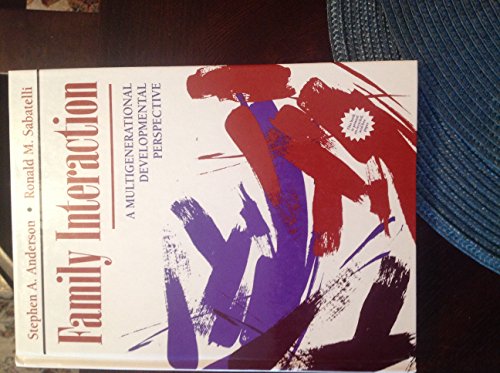
Using a family systems and a multigenerational, developmental framework, this text highlights the challenges faced by contemporary families as they move through time. It offers a comprehensive overview of the major conceptual models that are used to understand the patterns and dynamics that operate in families. It provides readers with an overview of the basic tasks that all families must execute regardless of their particular composition or living situation and, at the same time, offers readers an appreciation of the variety and uniqueness in how each family develops its patterns of interaction. All families must develop a shared sense of identity, create a nurturing emotional environment, manage resources, deal with stress, and negotiate successful boundaries between individual members and with the outside world. Yet it is the uniqueness of each family, its structural organization, and its particular cultural, ethnic, racial heritage, and gender orientation that will influence the strategies that evolve to meet these challenges. This book offers a unique vantage point on the family.Its emphasis is on integration-particularly an integration of family systems, family development, and intergenerational perspectives.
From the Back Cover
Most individuals intuitively "know" what it means to be a member of a family. After all, most of us were raised in one. But in each family there are dramatic differences. Each family creates its own culture within a culture. This intimate mini-society has its own unique rules and obligations -- dynamics and boundaries must shift and accomodate, stress levels and moods must be managed, and "the family," though full of diverse individuals of various ages, must somehow develop a shared sense of identity, and foster a nurturing emotional environment. Using a family systems and a multigenerational, developmental framework, this book highlights the challenges faced by contemporary societies as they move through time. This book offers a comprehensive overview of the major conceptual models that are used to understand the patterns and dynamics that operate in families. In its look at the structural organization, as well as the particular cultural, ethnic, racial heritage, and gender orientation of the family, this book offers strategies that families employ to meet challenges, while emphasizing the integration of family systems, family development, and intergenerational perspectives. Sociologists, family therapists, marriage counselors, psychologists, nurses, and families.
"About this title" may belong to another edition of this title.