Synopsis
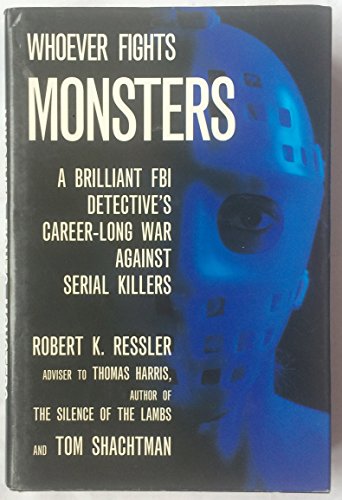
A chronicle of one man's life-long career tracking serial killers introduces the FBI detective who pioneered psychological profiling as a way to catch some of the nation's most dangerous and deranged criminals. National ad/promo. Tour.
Reviews
Former FBI agent Ressler ( Sexual Homicide ) coined the term "serial killer" in the 1970s. Writing with Schachtman ( Skyscraper Dreams ), he recounts in straightforward, fact-filled style his interviews with such infamous murderers as Edmund Kemper, Charles Manson, John Wayne Gacy, William Heirens and Ted Bundy. Onetime head of the FBI's Criminal Personality Research Project, Ressler corrects the misleading, romanticized criminal profiles found in the novels of Thomas Harris and Mary Higgins Clark; recalls how he compiled his ground-breaking, close-to-the-mark profiles of actual criminals who were later apprehended; and tells how he worked with mental-health professionals to explore killers' personality traits. Before Ressler, the FBI knew surprisingly little about dangerous criminals. His quest--catching and understanding criminals--absorbs and unsettles the reader, placing true crime in the real world. Photos not seen by PW.
Copyright 1992 Reed Business Information, Inc.
The FBI agent who coined the term ``serial killer'' boasts about his exploits--and for good reason. Modesty isn't Ressler's strong suit, as even the subtitle attests, but his career is packed with so many amazing episodes- -well related here with the help of Shachtman (Skyscraper Dreams, 1991, etc.)--that the chest-beating is forgivable. Ressler's major contribution to criminology has been his pioneering work in psychological profiling, which he developed by visiting prisons and talking to scores of convicted killers. His accounts here of interviews with Charles Manson, Richard Speck, Ted Bundy, John Wayne Gacy, and others are told with a fine flair for drama--e.g., of being locked in a cell with 6'9'', 300-pound mutilation-killer Ed Kemper, who, when it was clear that guards weren't answering Ressler's call to open the cell door, threatened to ``screw off'' the FBI man's head. Myriad tales of how Ressler tracked down killers complement the jailhouse yarns and offer much insight into serial killers' minds. Of primary importance is to determine whether a killer is ``organized'' or ``disorganized,'' stresses Ressler, who goes on to explain that all serial killings are classified as ``sexual homicides,'' because at their root is a ``sexual maladjustment'' that ``drives'' the ``fantasies'' that are played out in death. As deeply as Ressler gets into killers' heads, though, he refuses to reveal much of his own here, offering no explanation other than ``fascination'' and ``interest'' for why he's devoted his life to a calling so dire and soul-wearying that, as he emphasizes and as the title quote from Nietzsche concludes, one who follows it risks becoming ``a monster himself.'' Gibbering horrors brought to heel, secrets of the serial- killer unveiled: a true-crime bonanza, though a bit more self- introspection would have iced the cake. (Sixteen-page b&w photo insert--not seen.) -- Copyright ©1992, Kirkus Associates, LP. All rights reserved.
The success of Silence of the Lambs has readers fascinated with serial killers. "New applicants to the FBI's Behavioral Sciences Unit are taking Jodie Foster's character as a role model," notes Ressler, who was consulted for the movie but felt it should have been more realistic. The book is an informative and insightful account of Ressler's 30-year FBI career and the development of the Violent Criminal Apprehension Program. Ressler's numerous interviews with convicted killers (e.g., David Berkowitz, Ted Bundy), use of behavioral sciences principles, and many years of detective experience have given him an uncanny ability to "read" a crime scene and develop a criminal profile of the offender. His involvement in multiple serial killer investigations gives the reader an insider's view into police work. This book is an entertaining alternative to Eric W. Hickey's Serial Murderers and Their Victims ( Wadsworth, 1991) and Joel Norris's Serial Killers (Doubleday, 1988). Recommended for general readers and true crime collections. Previewed in Prepub Alert, LJ 1/92.
- Robert Hodder, Memorial Univ. of Newfoundland Lib., St. John's
Copyright 1992 Reed Business Information, Inc.
"About this title" may belong to another edition of this title.