Synopsis
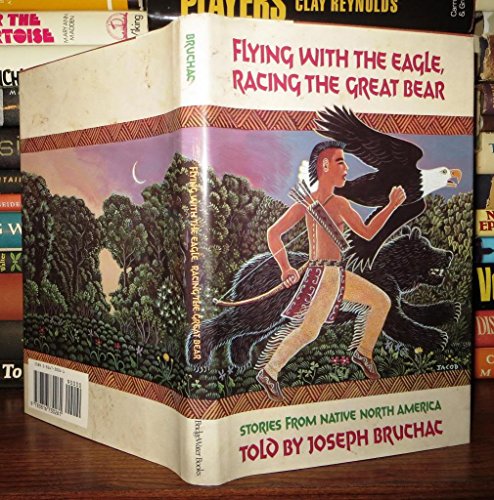
Each story in this collection of authentic native North American tribal tales drawn from sixteen native American cultures focuses on the unifying theme of a boy's passage into manhood.
Reviews
In Native American cultures the passage of a boy into manhood is a highly significant event marked by a variety of rituals. "One powerful way in which the meanings of this transition have been taught for thousands of years is through traditional stories," remarks storyteller/author Bruchac in the introduction to this selection of coming-of-age tales (see also Bruchac's Fox Song , reviewed above). Organized according to the region of North America from which they originate, these brief fables have the moral structure and pungent immediacy found in the more widely known European folktales. In the title story, from the Iroquois, Swift Runner--a small, underestimated boy--becomes a man when he hunts and kills a bear that has murdered members of his tribe. A Caddo story, "The Wild Boy," links the origin of thunder and lightning to two brothers' quest. Ignored by his father, the Pueblo hero of "The Bear Boy" is raised alongside a mother bear's cubs. Words and phrases from various Native American languages liberally stud the well-cadenced text, enhancing the already authentic atmosphere. Ages 10-13.
Copyright 1993 Reed Business Information, Inc.
Sixteen stories with similar themes, gathered from various Native American traditions. Boys--sometimes with names like ``Bad Young Man'' or ``Boy Who Grew Up Wild''--pass into manhood after they undertake vision quests, heroically slay monsters, or are transformed into animals. Several have magic helpers or receive good advice from elders; strength is displayed by sparing life as well as taking it. In the Navajo ``How the Hero Twins Found Their Father,'' Monster Slayer deliberately allows Hunger, Cold, Poverty and Old Age to go free; the Muskogee Blue Fox makes peace with Cherokee attackers rather than slaughtering them. Though the flavor of Bruchac's spare, formal language is more literary than oral, he has drawn few (if any) of these stories from printed sources; thus, he offers readers new insight into a range of Native American cultures--and into history, too, since he includes a description of Crazy Horse's vision quest, and a subarctic hunter's reminiscence of his first whale hunt. The tales in each regional section are prefigured by Jacob's handsome, white-on-black medallions. Brief reading list; foreword and afterword on the value of oral and cultural transmission. (Folklore. 11-13) -- Copyright ©1993, Kirkus Associates, LP. All rights reserved.
Gr. 5-8. Bruchac introduces his collection of male rites-of-passage stories by explaining that Native American cultures used stories both to instruct and to entertain. Because of the significance of the number four in many tribes, he's arranged the stories, which he's drawn from tales he shared with his sons, into four geographically organized sections, each containing four stories. Some are tales of courage, some are pourquoi tales, and some show the impact of disobedience or disrespect. The tales are easy to follow and to envision, but they can be understood and interpreted on many levels. Striking black-and-white illustrations, with decorated borders, introduce each of the sections, which begin with information about the significance of the tales to their tribes. Unfortunately, Bruchac fails to provide source notes, though he does suggest a few additional resources for stories and information about storytelling in American Indian cultures. A useful collection for middle-school readers as well as classroom teachers. Karen Hutt
"About this title" may belong to another edition of this title.