Synopsis
What are the environments, the public spaces, in which ordinary people become participants in the complex, ambiguous, engaging conversation about democracy: participators in governance rather than spectators or complainers, victims or accomplices? What are the roots, not simply of movements against oppression, but also of those democratic social movements which both enlarge the opportunities for participation and enhance people's ability to participate in the public world?
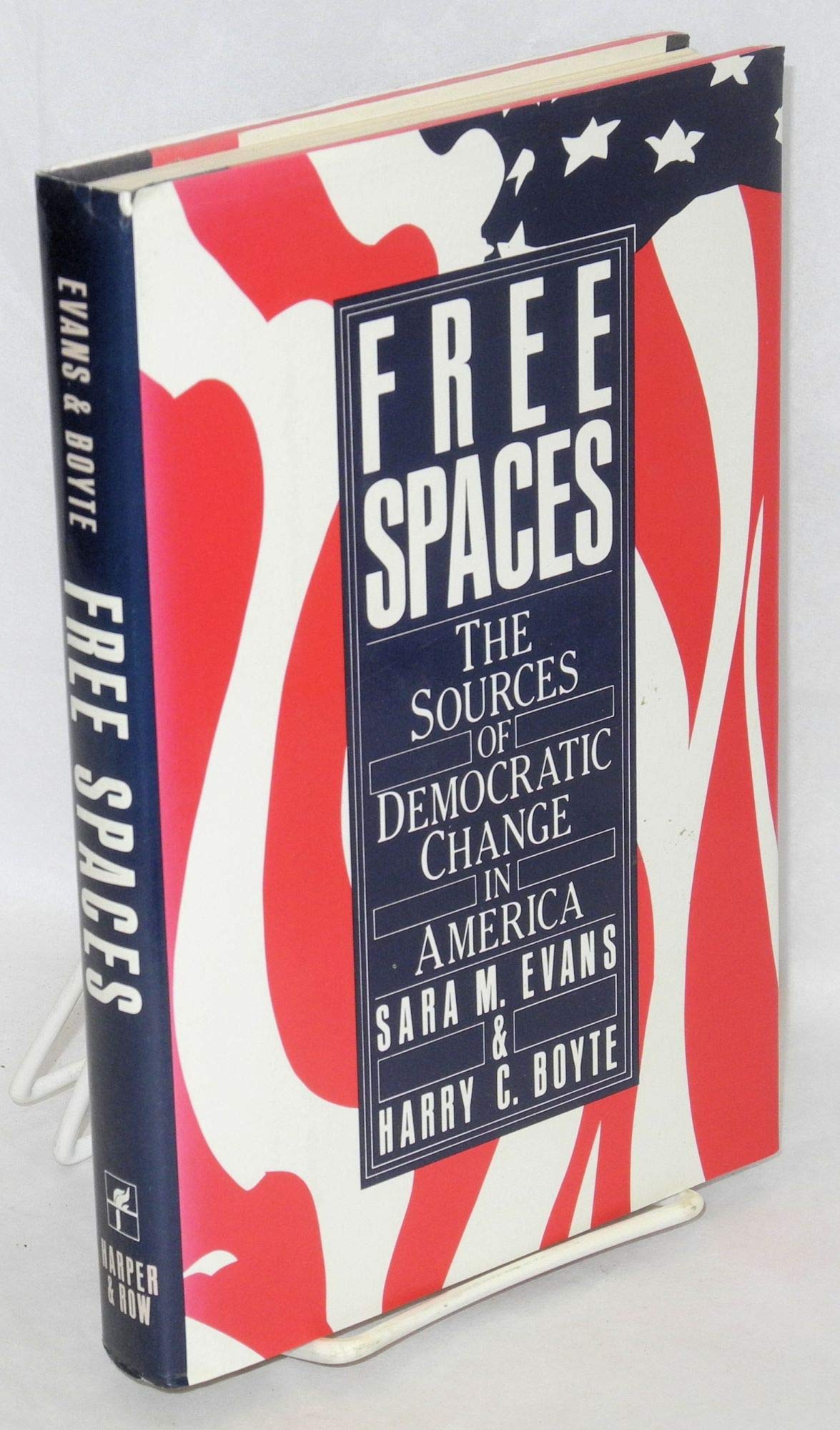
In Free Spaces, Sara M. Evans and Harry C. Boyte argue for a new understanding of the foundations for democratic politics by analyzing the settings in which people learn to participate in democracy. In their new Introduction, the authors link the concept of free spaces to recent theoretical discussions about community, public life, civil society, and social movements.
Reviews
This compelling study argues that community life, in one form or another, has been a crucial factor in attempts by ordinary Americans to seek democratic change. The authors show how "free spaces"voluntary associations from social clubs to civic, ethnic and reform groupshave fostered democratic action and "schooling" in both citizenship and the common good throughout U.S. history. Focusing on the major movements for social change involving blacks, women and labor, they examine such issues as the role of black churches in the civil rights struggle, and the part played by ethnic communities in the fight to organize labor. The authors' fresh view of communities, so often seen as bulwarks of the status quo, makes this a valuable vantage on democracy and the common citizen. Evans wrote Personal Politics; Boyte's books include The Backyard Revolution.
Copyright 1986 Reed Business Information, Inc.
The authors argue that major social movements benefitting blacks, women, labor, and farmers began with voluntary associations that provided their respective members with the skills to accomplish social change. For example, black churches, free from white control, allowed "free spaces" that ultimately furthered the goals of abolition and civil rights. Evans and Boyte observe that thinkers on both the right and left of the political spectrum view voluntary groups as conservative forces that help stabilize the existing order. Right-wing individuals affirm such groups, while the left regards them as counterproductive to social change. The authors argue, however, that participation in such groups as local unions, neighborhood organizations, rural cooperatives, etc., has done more to advance democracy than have the citizenship activities of becoming politically informed and voting. Recommended primarily for academic libraries. David Steiniche, Social Sciences Dept., Missouri Western State Coll., St. Joseph
Copyright 1986 Reed Business Information, Inc.
"About this title" may belong to another edition of this title.