Synopsis
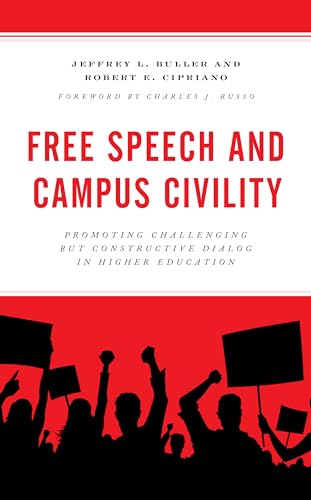
Many colleges and universities are struggling to strike a balance between protecting free speech as a way of supporting their goal of academic freedom and promoting civility as a way of creating an environment where students can learn and faculty members can teach and conduct research. There have been numerous recent incidents of audiences shouting down speakers, burning books, and demanding that specific students be expelled or faculty members be terminated. In this highly fractious environment, schools are wondering “What works?” when seeking to attain the twin goals of permitting unrestricted speech but insisting on rules of decorum for debate and the exchange of perspectives. This book explores what schools have actually attempted, in some cases successfully and in some cases not successfully, to address these issues. It concludes that there are three primary strategies that tend to be effective: treating challenges to free speech and campus civility as “teachable moments”; exploring hypothetical scenarios with students, faculty members, and administrators before there is a serious incident; and approaching free speech and campus civility across the curriculum. The book also surveys United States case law on the topics of free speech, academic freedom, the right to protest, and similar subjects so as to provide faculty members and administrators with a concise resource filled with practical and accurate information.
About the Author
Charles J. Russo is the Joseph Panzer Chair in Education in the School of Education and Health Sciences, Director of its Ph.D. Program, and Research Professor of Law in the School of Law at the University of Dayton. Author or co-author more than 280 articles in peer-reviewed journals; authored, co-authored, edited, or co-edited more than 60 books, and more than 1,000 publications, Russo speaks extensively on issues in Education Law in the United States and other Nations.
"About this title" may belong to another edition of this title.