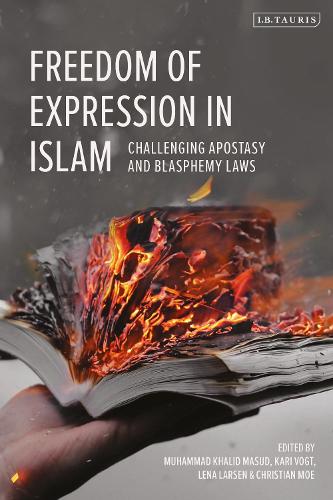
Freedom of Expression in Islam
Muhammad Khalid Masud
Sold by Rarewaves.com UK, London, United Kingdom
AbeBooks Seller since June 11, 2025
New - Hardcover
Condition: New
Ships from United Kingdom to U.S.A.
Quantity: Over 20 available
Add to basketSold by Rarewaves.com UK, London, United Kingdom
AbeBooks Seller since June 11, 2025
Condition: New
Quantity: Over 20 available
Add to basketIn Muslim countries, apostasy and blasphemy laws are defended on the grounds that they are based on Islamic Shari'a and intended to protect religion. But blasphemy and apostasy laws can be used both to suppress thought and debate and to harass religious minorities, both inside and outside Islam. This book - comprising contributions from Muslim scholars, experts and activists - critically and constructively engages with the theological, historical and legal reasoning behind the most restrictive state laws around the world to open up new ways of thinking. The book focuses on the struggle within Muslim societies in Iran, Egypt, Pakistan and Indonesia where blasphemy and apostasy laws serve powerful groups to silence dissent and stifle critical thought. The first part of the book covers the development of the law in shifting historical circumstances and surveys the interpretations of Qur'anic verses that seem to affirm freedom of religion. The second part examines the present politics and practices of prosecuting alleged blasphemers and/or apostates in Muslim countries. The third part looks to the future and where reforms of the law could be possible.Debates on Islam and freedom of expression are often cast in polarizing terms of rights versus religion, East versus West. This volume avoids such approaches by bringing together a diverse group of Muslim scholars and activists with the knowledge, commitment and courage to contest repressive interpretations of religion and provide a resource for reclaiming the human rights to freedom of expression and belief.
Seller Inventory # LU-9781784538576
In Muslim countries, apostasy and blasphemy laws are defended on the grounds that they are based on Islamic Shari'a and intended to protect religion. But blasphemy and apostasy laws can be used both to suppress thought and debate and to harass religious minorities, both inside and outside Islam. This book – comprising contributions from Muslim scholars, experts and activists - critically and constructively engages with the theological, historical and legal reasoning behind the most restrictive state laws around the world to open up new ways of thinking.
The book focuses on the struggle within Muslim societies in Iran, Egypt, Pakistan and Indonesia where blasphemy and apostasy laws serve powerful groups to silence dissent and stifle critical thought. The first part of the book covers the development of the law in shifting historical circumstances and surveys the interpretations of Qur'anic verses that seem to affirm freedom of religion. The second part examines the present politics and practices of prosecuting alleged blasphemers and/or apostates in Muslim countries. The third part looks to the future and where reforms of the law could be possible.
Debates on Islam and freedom of expression are often cast in polarizing terms of rights versus religion, East versus West. This volume avoids such approaches by bringing together a diverse group of Muslim scholars and activists with the knowledge, commitment and courage to contest repressive interpretations of religion and provide a resource for reclaiming the human rights to freedom of expression and belief.
Muhammad Khalid Masud is an ad hoc member of the Shariat Appellate Bench of the Supreme Court of Pakistan. He is co-editor of Dispensing Justice in Islam: Qadis and Their Judgments (2006) and Islam and Modernity: An Introduction to Key Issues and Debates (2009).
Kari Vogt is Associate Professor (emeritus) at the Department of Cultural Studies and Oriental Languages at the University of Oslo, Norway. She has published widely on Islamic and Middle East issues.
Lena Larsen is Director of the Oslo Coalition on Freedom of Religion or Belief at the University of Oslo, Norway. She is the author of How Muftis Think: Islamic Legal Thought and Muslim Women in Western Europe (2018).
Christian Moe is an independent writer and researcher based in Slovenia. He has written on human rights and religion, religious education, and contemporary Islam in the former Yugoslavia.
"About this title" may belong to another edition of this title.
Please note that we do not offer Priority shipping to any country.
We currently do not ship to the below countries:
Russia
Belarus
Ukraine
Please do not attempt to place orders with any of these countries as a ship to address - they will be cancelled.
| Order quantity | 60 to 60 business days | 60 to 60 business days |
|---|---|---|
| First item | US$ 87.07 | US$ 133.95 |
Delivery times are set by sellers and vary by carrier and location. Orders passing through Customs may face delays and buyers are responsible for any associated duties or fees. Sellers may contact you regarding additional charges to cover any increased costs to ship your items.