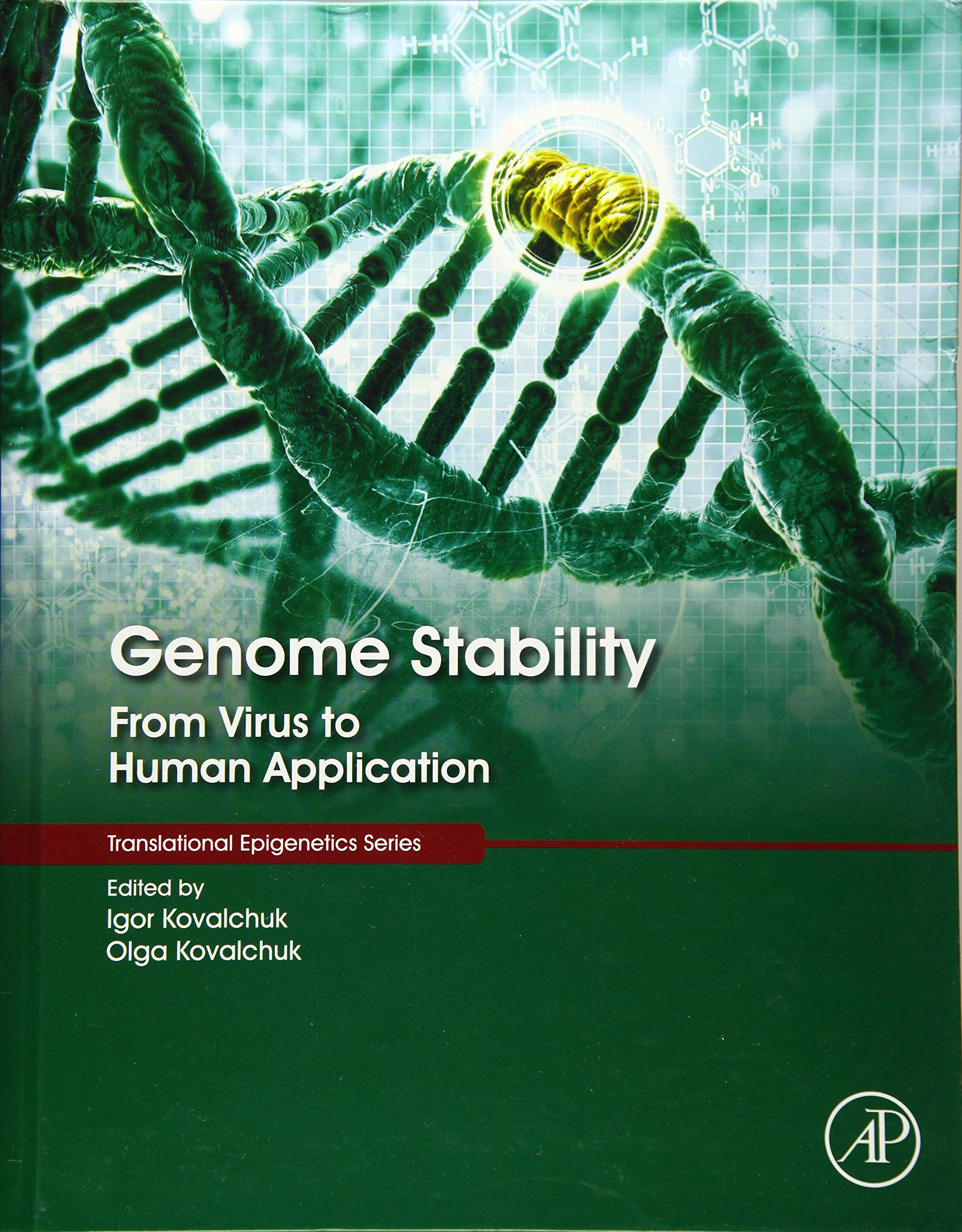
Every species has to preserve the integrity of its genome to ensure faithful passage of genetic information to the progeny. At the same time, there are times during the life of the organism and population in general when a fine balance in genome stability and diversification has to be made to benefit the survival of the species. Genome Stability teaches the reader how various species maintain this fine balance in genome stability and genome diversification in response to their environments.
Genome Stability covers a wide range of topics, including the genome stability of DNA/RNA viruses, prokaryotes, single cell eukaryotes, lower multicellular eukaryotes and mammals. Topics also include major DNA repair mechanisms, the role of chromatin in genome stability, human diseases associated with genome instability as well as changes in genome stability in response to aging. Finally, Genome Stability covers how epigenetic factors contribute to genome stability and how the species pass the memory of the encounters to the progeny, thus influencing the genome of the progeny in an indirect manner. This volume is an essential resource for geneticists, epigeneticists, and molecular biologists who are looking to gain a deeper understanding of this rapidly-expanding field, and can also be of great use to advanced students who are looking to gain additional expertise in genome stability.
- Includes a collection of chapters on genome stability research from various kingdoms, including topics such as epigenetics and transgenerational effects
- Provides the first comprehensive coverage of the differences in the mechanisms utilized by different organisms to maintain genomic stability
- Contains applications of genome instability and its effect on human diseases
- Explains how various species maintain the fine balance in genome stability and genome diversification in response to their environments
Dr. Igor Kovalchuk is the Principle Investigator in the Plant Biotechnology laboratory at the University of Lethbridge. His lab studies genetic and epigenetic regulation of plant response to stress as well as develops various methods for improvement of plant transformation. He is particularly interested in the transgenerational effects of stress and microevolution of plant stress tolerance/resistance.
He has substantial expertise in plant stress tolerance and plant transgenesis.
Dr. Olga Kovalchuk is the Principle Investigator of the Human Epigenetics laboratory at the University of Lethbridge. Her lab studies the role of epigenetic dysregulation in carcinogenesis, epigenetic regulation of the cancer treatment responses, radiation epigenetics and the role of epigenetic changes in genome stability and carcinogenesis, radiation-induced oncogenic signaling, and radiation-induced DNA damage, repair, and recombination.