Synopsis
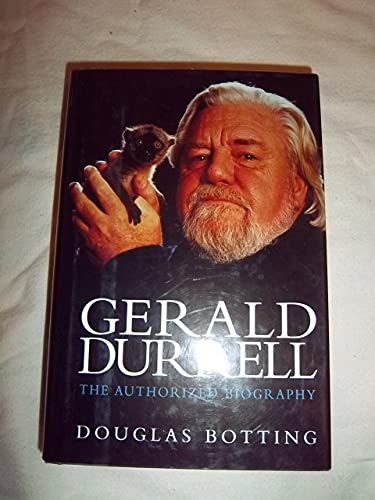
When the much-loved Gerald Durrell died aged seventy in 1995, he left behind not only his bestselling My Family and Other Animals and A Zoo in My Luggage, but also the legacy of the zoo he'd dreamed of as a small boy, where he pioneered the captive breeding of animals for conservation. With the authorization of Gerald Durrell's widow, Lee, and his surviving family, biographer Douglas Botting traces the life of the world-famous naturalist and popular author of over thirty-seven bestsellers. Brother of the famous novelist Lawrence Durrell, the younger Durrell always saw his writings about his eccentric family in Imperial India or on the idyllic island of Corfu and his early interest in birds and beasts as the means of financing his great passion: the breeding of endangered species for their return to the wild. Like Jacques Cousteau, he traveled across the globe, bringing the exotic natural world closer to ordinary people, and presented a dozen different television documentary series on zoology, such as Catch Me a Colobus and Ark on the Move, which gave him an international audience. As he traces Durrell's growing menagerie of tapirs, angwantibos, gorillas, lemurs, tamarins, and Chumley the chimp, Botting brings to life the man Sir David Attenborough called "a pioneer with a marvelous sense of humor." "[Botting's] admiration and affection for his subject are infectious" - Sunday Times (London)
Reviews
All Durrell fans will want to own this captivating and deeply moving but surprisingly (for an authorized book) candid biography. It offers a rounded portrait of all sides of the man-naturalist, animal lover, champion of conservation, prolific author, zoo founder, bon vivant, documentary filmmaker, poet, broadcaster, explorer, marathon globetrotter. Getting past the public persona of the charming, modest, resolute, jovial guru, British writer Botting (Humboldt and the Cosmos) reveals a very different Gerald Durrell (1925-1995)Aan astute, cunning, sometimes overbearing political animal; an alcoholic who mixed booze and tranquilizers; a visionary whose seemingly hopeless self-appointed mission to save the world's endangered species drove him to despair, sporadic rage and misanthropy, costing him his privacy, peace of mind, health and first marriage. Durrell's zoo, which he founded on the English isle of Jersey in 1959, pioneered the captive breeding of animals threatened with extinction, with the aim of reintroducing them to their native habitats. In some ways Jersey recapitulated his boyhood idyll on the Greek island of Corfu, where Durrell (born in India) had moved from London with his bohemian family in 1935 at the age of 10. Botting, who had exclusive access to the Durrell family archives and to Durrell's voluminous private papers, fills this uninhibited biography with hitherto unpublished autobiographical sketches, letters and diary excerpts; with wonderful stories of animals and people; with a perceptive account of Durrell's relationships with his two wives and his novelist brother, Lawrence, who sparked his interest in writing. Though critical of Durrell at times, this extraordinary saga remains true to the adventurous spirit of Durrell's writings, capturing a dynamo beset by a gnawing fear that his life's work had been in vain. Photos. Agent, Andrew Hawson at John Johnson. (Nov.)
Copyright 1999 Reed Business Information, Inc.
A portly, respectful biography of the late British conservationist, author, and raconteur. Like his better-known brother, the novelist and travel essayist Lawrence Durrell, Gerald Durrell (192595) was born in India and lived in England only under protest: ``That mean, shabby little island wrung my guts out of me and tried to destroy anything singular and unique in me,'' wrote Lawrence bitterly, and Gerald was inclined to agree. Although he would regard England as his home for most of his life, Gerald Durrell spent as much time as he could away from the island, traveling widely around the world in pursuit of his zoological interests and exploring deserts, savannas, mountains, and jungles far afield. Botting (One Chilly Siberian Morning, 1967) provides a thoroughly documented account of Durrell's itinerary, charting his development from amateur to professional naturalist whose books, such as My Family and Other Animals, were once widely read. Botting does an especially good job of addressing Durrell's many contributions to wildlife conservation; among other things, Durrell founded the Jersey Zoo, which helped protect dozens of endangered species, and he advised many governments on programs to protect indigenous animals. For these contributions alone, Botting suggests, Durrell deserves to be remembered todayeven while divorcing him, Durrell's wife was moved to remark, ``As a champion of the animal world and a pioneer of animal conservation he was one of the great men of our age, and his immense contribution to the cause is only now beginning to sink in.'' But Botting avoids hagiography, and he does offer a capable accounting of other aspects of Durrell's life as a writer, lecturer, sometime celebrity, and bon vivant. The result is a solid, engaging biography that will appeal to Durrell's admirersand perhaps, with good cause, earn him a few more. (24 pages b&w photos, not seen) -- Copyright ©1999, Kirkus Associates, LP. All rights reserved.
Botting plumbs the depths of famed naturalist Gerald Durrell, evoking the real man behind the jovial facade. The story begins in India, where Gerald was born, and covers his golden boyhood on the Edenic island of Corfu, where he roamed freely to collect a wide variety of fauna ("The Boy's Mad . . . Snails in his Pockets!") and where he blossomed without the confines of formal schooling. Drawing on the Durrell family archives and Gerald Durrell's private papers, Botting shows both the naturalist's triumphs--especially the founding of the Durrell Wildlife Conservation Trust--and the "abysses and chasms" in his life, many brought on by alcohol abuse. The result is a warm, often poignant portrait that, aided by extensive quotes from Durrell's books, evokes a definite sense of the man's wit as well as his passions. Readers will feel that they really get to know Durrell, his eccentric family, and the extraordinary animals in his life. Sally Estes
Botting, the biographer of naturalist Alexander von Humboldt (Humboldt and the Cosmos), here offers an exhaustive study of a man who had widespread influence in the world of naturalists and zoos (Durrell was founder of the zoo on the island of Jersey), nature writing, animal rights, nature shows on television, and endangered species conservation (he also founded the Jersey Wildlife Preservation Trust). Clearly, Durrell, who died in 1995, was a very significant and farsighted man. Readers will gain insight into what made Durrell who he was, from the early influences of his beloved mentor, Theo Stephanides, his family (including his famous author brother, Lawrence), and his friends. Given full access to Durrell's personal and professional papers, Botting clearly admires his subject yet presents an evenhanded account, including "the warts," as he calls them. Readers familiar with Durrell will relish this detailed biography. Those yet to know this influential giant have this near encyclopedia waiting. Strongly recommended for all collections.ANancy J. Moeckel, Miami Univ. Libs., Oxford, OH
Copyright 1999 Reed Business Information, Inc.
"About this title" may belong to another edition of this title.