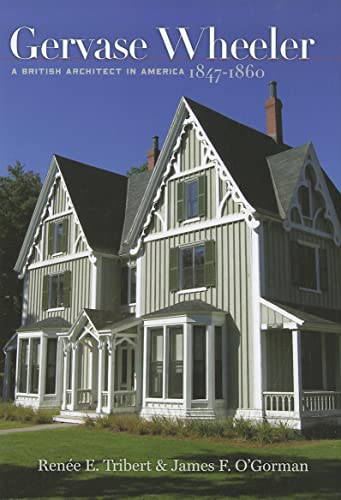
The American career of an influential English architect
Gervase Wheeler was an English-born architect who designed such important American works as the Henry Boody House in Brunswick, Maine; the Patrick Barry House in Rochester, New York; and the chapels at Bowdoin and Williams colleges. But he was perhaps best known as the author of two influential architecture books, Rural Homes (1851) and Homes for the People (1855). Yet Wheeler has remained a little known, enigmatic figure. Renée Tribert and James F. O'Gorman's study sheds new light on the course of Wheeler's career in the states, and brings crucial issues to the fore―the international movement of ideas, the development of the American architectural profession, the influence of architectural publications on popular taste, and social history as expressed in the changing nature of the American house. Wheeler's career is traced chronologically and geographically and the book is lavishly illustrated with over fifty images, including building plans and historical photographs.
A Driftless Connecticut Series Book, funded by the Beatrice Fox Auerbach Foundation Fund at the Hartford Foundation for Public Giving.
RENÉE TRIBERT is an independent historian and writer living in Simsbury, Connecticut. JAMES F. O'GORMAN is the McNeil Professor Emeritus at Wellesley College. He is author of Henry Austin: In Every Variety of Architectural Style, winner of Historic New England's 2009 Book Prize and the 2010 Henry-Russell Hitchcock Award from the Victorian Society of America.