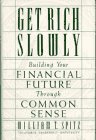
Synopsis
A guide to investment in real estate, stocks, bonds, and money markets describes the five-step process investors can follow, explaining how to expect and prepare for the amount of risk necessary to reap the benefits.
Reviews
Patience and careful planning are the basic counsel of this thorough and readable financial guide by a Vanderbilt University treasurer and money-management lecturer. The author analyzes financial markets and instruments in terms of an individual investor's objectives (e.g., retirement, a child's education) and tolerance for varying degrees of risk-vs.-return in stocks, bonds, real estate partnerships, etc., from which a balanced portfolio may be compiled for maximum return over time. Among the many aspects of personal finance detailed here, Spitz explains how compounded income from a selection of mutual funds can build a fortune and how, with greater risk, various industrial situations can reward (or penalize) more direct investment in stocks "to beat the market."
Copyright 1992 Reed Business Information, Inc.
Spitz (treasurer, Vanderbilt Univ.) proposes that an investor should seek to balance the effect of economic conditions on investments and identify a level of risk that is comfortable. Though he allows for the inclusion of other assets in an individual's financial plan, he emphasizes the securities market. His advice is levelheaded and conservative, but building wealth over an entire lifetime includes a wider scope of financial decisions than choosing appropriate stocks and bonds. Libraries should look elsewhere for titles on personal financial planning that cover a wider range of choices.
- Joseph Barth, U.S. Military Acad. Lib., West Point, N.Y.
Copyright 1992 Reed Business Information, Inc.
"About this title" may belong to another edition of this title.