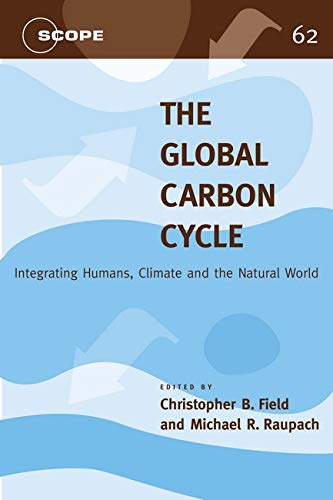
While a number of gases are implicated in global warming, carbon dioxide is the most important contributor, and in one sense the entire phenomena can be seen as a human-induced perturbation of the carbon cycle. The Global Carbon Cycle offers a scientific assessment of the state of current knowledge of the carbon cycle by the world's leading scientists sponsored by SCOPE and the Global Carbon Project, and other international partners. It gives an introductory over-view of the carbon cycle, with multidisciplinary contributions covering biological, physical, and social science aspects. Included are 29 chapters covering topics including: an assessment of carbon-climate-human interactions; a portfolio of carbon management options; spatial and temporal distribution of sources and sinks of carbon dioxide; socio-economic driving forces of emissions scenarios.
Throughout, contributors emphasize that all parts of the carbon cycle are interrelated, and only by developing a framework that considers the full set of feedbacks will we be able to achieve a thorough understanding and develop effective management strategies.
The Global Carbon Cycle edited by Christopher B. Field and Michael R. Raupach is part of the Rapid Assessment Publication series produced by the Scientific Committee on Problems of the Environment (SCOPE), in an effort to quickly disseminate the collective knowledge of the world's leading experts on topics of pressing environmental concern.
Christopher B. Field is Director of the Department of Global Ecology at the Carnegie Institution of Washington, in Stanford, California.
Michael R. Raupach is Chief Research Scientist in the CSIRO Land and Water Landscape Systems Research Directorate in Australia.
The Scientific Committee on Problems of the Environment (SCOPE) was established by the International Council for Science (ICSU) in 1969. It brings together natural and social scientists to identify emerging or potential environmental issues and to address jointly the nature and solution of environmental problems on a global basis.With its headquarters in Paris, France, SCOPE programs are conducted by volunteer scientists from every inhabited continent of the globe.