Synopsis
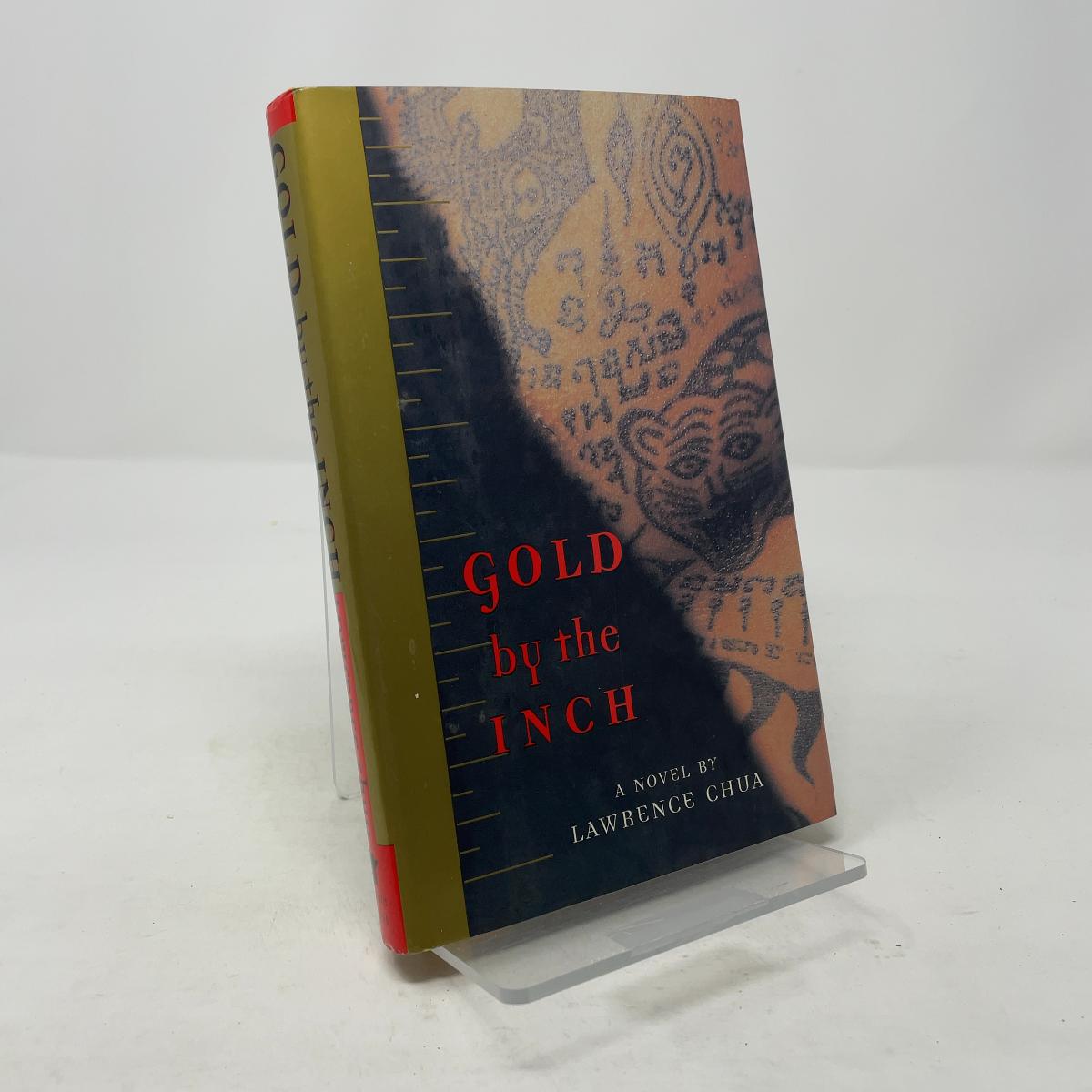
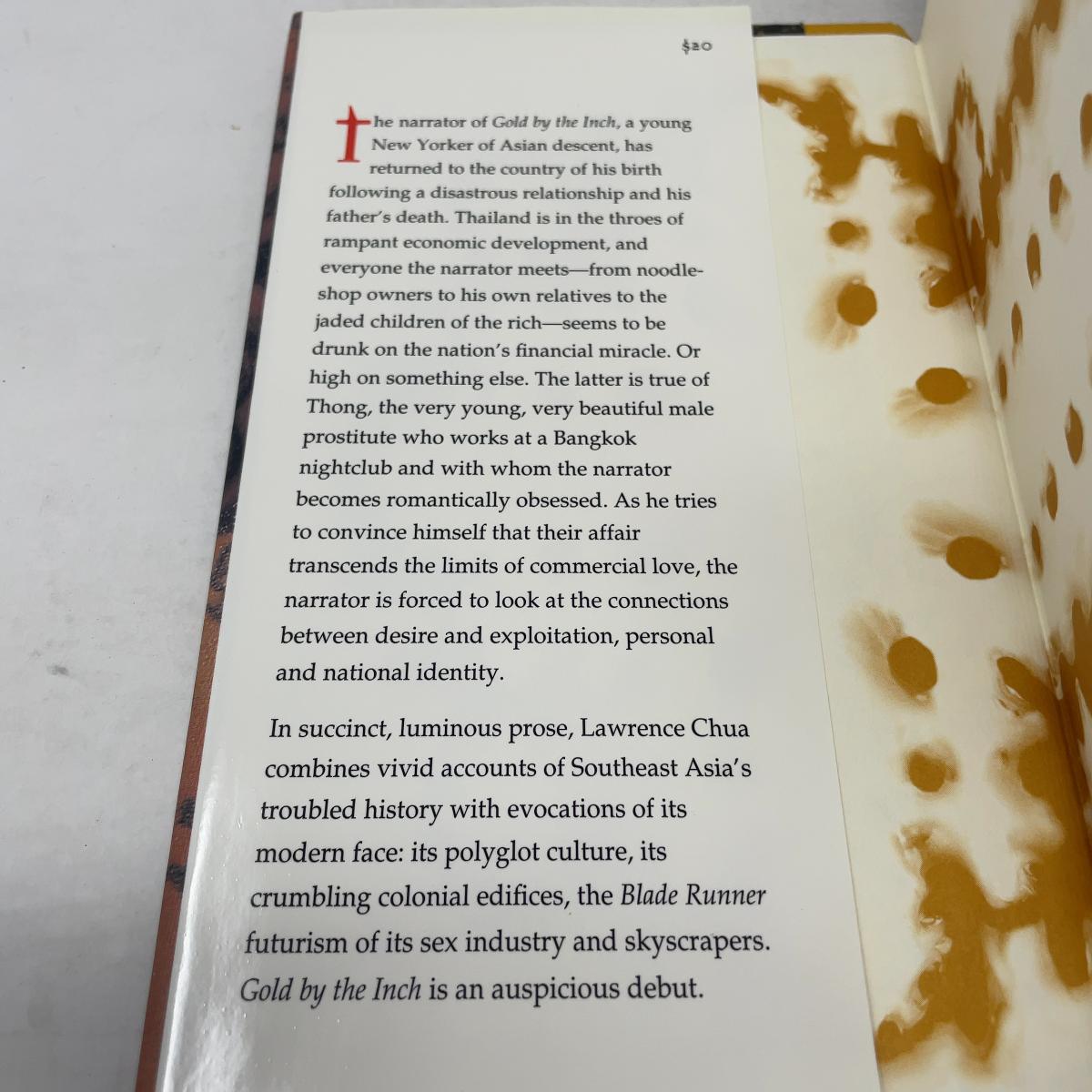
When a young Asian man becomes involved with a male prostitute in New York, he learns that there is a fine line between both passion and exploitation and cultural and personal identity, in an intense novel that combines the turbulent history of Southeast Asia with present-day culture. Tour.
Reviews
A clever challenge to Marguerite Duras's The Lover, this first novel by journalist Chua updates the time-honored themes of empire and eroticism. In a stream of precise prose in which "even the mess has an intellectual clarity," the narrator, a nameless, precocious 23-year-old gay New Yorker, lands in his native Thailand after a 13-year absence and a painful breakup with his American lover. Recovering with drugs and debauchery in the discos of Bangkok, he quickly falls for a beautiful, privileged prostitute named Thon and ends up living with Thon's wealthy family until the affair comes to an inevitable, unhappy end. Chua's prose is sensuous, often feverish, studded with vivid images: we're hearing, the narrator notes, "the sound of time eating its own children." Despite the sadness of his subject and the grimness of his historical imagination, the narrator's restless curiosity survives his romantic disillusionments. "I love you because your body is expensive," he says near the end of the novel. In Chua's debut, love always comes with a calculable pricetag, whether or not it can be paid in cash.
Copyright 1998 Reed Business Information, Inc.
Imagery suggesting the-urban-jungle-is-hell-nor-are-we-out-of- it threatens to suffocate a frenetic first novel about an Asian- born architect's return from America to his native Thailand. The unnamed narrator is 23, gay, and intermittently guilty for having willfully separated from his family (with whom he had emigrated to America) and bitter about his country's transformation into a glitter palace buoyed by a booming economy and riddled with drugs, booze, and beautiful people whose bodies are for hire. Chua's fragmented narrative juxtaposes these concerns against his protagonist's awareness of his own moral deterioration, which takes the form of his infatuation with a gorgeous but somewhat distracted male prostitute, Thon (he of the ``face that inspires a thousand plane tickets, a million visa bribes''). A number of the story's particulars are indeed compelling: for example, the history of violent behavior that has threaded its way through the narrator's family, climaxing with his scapegrace father's dementia and death, and the mysterious unexplained demise of his grandmother, who may have been murdered (though this later information rather too nakedly emblemizes a distorted ethnic heritage). There's also a potentially fascinating subtheme implied by the narrator's intuition that the body expresses the spirit of its desires exactly as architecture expresses that of a city--but the concept is left in an essentially inchoate state. The novel is further burdened with barely fictionalized jeremiads condemning injustices perpetrated by colonialist exploitation (``The British Empire at the beginning of the nineteenth century was essentially a drug cartel''). The idea of an architect who can't impose order on his experiences and emotions is a promising one, and the narrator's pain and outrage seem real enough--but Chua's first fiction flies in too many directions at once to engage the reader's interest fully. -- Copyright ©1998, Kirkus Associates, LP. All rights reserved.
In this gritty and revealing first novel, a 23-year-old gay male of Thai descent returns to his homeland, known for its thriving sex industry, where anything and anyone can be purchased for a price, to escape life and be with family following the death of his father and a failed relationship back in New York. The narrator takes the reader along with him on a dark journey into the nightclubs, where his evenings are often filled with sex, drugs, overindulgence, and obsession. Writing in the first and second person, Chua gives readers a true sense of his protagonist's complex struggles. His wayward journey becomes the narrator's quest for love and understanding. The images are often graphic and disturbing, giving this story a hard and realistic edge. Ultimately, Chua's novel serves as a commentary on life in a society vastly different from our own. Well recommended but not for all collections.?Shirley N. Quan, Orange Cty P.L., Fountain Valley, CA
Copyright 1998 Reed Business Information, Inc.
"About this title" may belong to another edition of this title.