Synopsis
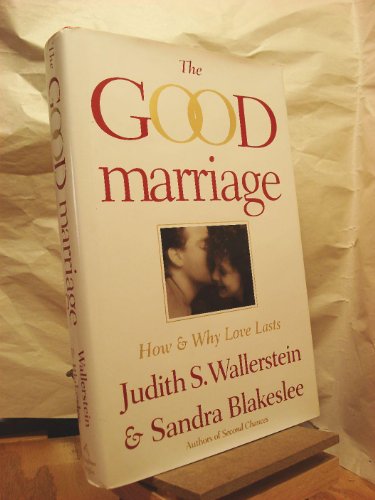
Incorporating the experiences of fifty couples who consider themselves happily married, the author distinguishes four types of marriage, identifies their natural stages, and details nine psychological tasks essential to a good marriage. By the authors of Second Chances. Tour.
Reviews
Following Second Chances, her landmark 1989 study of the long-term effects of divorce, clinical psychologist Wallerstein considers what makes marriages work in this perceptive and revealing report. Writing with New York Times science reporter Blakeslee (who also coauthored Second Chances), Wallerstein interviewed 50 predominantly white, middle-class, northern California couples who had been married nine years or more and had at least one child. Their strong, stable marriages flourish, in her view, because every partner confronted a series of psychological tasks: separating emotionally from the family of childhood; carving out his or her autonomy; creating an environment where anger and conflict could be safely vented; and so forth. Identifying four types of marriages?romantic, rescue, compassionate, traditional?Wallerstein examines the hazards and potentials of each, concluding that a good marriage is a matrix for growth whereby each partner changes the other profoundly over the course of the union. Mingling case histories, advice and observation, this study should prove a lifesaver for many couples. 100,000 first printing; $150,000 promo; first serial to McCall's, Good Housekeeping, Redbook and Cosmopolitan; author tour.
Copyright 1995 Reed Business Information, Inc.
Although Wallerstein is best known for her work on divorce, she and Blakeslee (coauthors of Second Chances, LJ 2/1/89) have put together a very appealing book based on interviews with 50 couples who are still together, and still happy, after years of marriage. Most of the book is concerned with defining the four types of marriages (romantic, rescue, companionate, and traditional) that Wallerstein discovered through her interviews. Descriptions of four couples who idealize these types are given in minute detail. The rest of the book outlines nine developmental tasks-derived from Wallerstein's practice as well as the interviews-that couples need to accomplish if their marriage is to be a happy one. Despite some oddities, such as the amount of extraneous detail given when discussing the interviewees' homes, and the fact that this was based on a small and skewed sample group-all participants were middle or upper-middle class and all but one couple were Caucasian-this book will appeal to public library users who want a clearly written and clearly thought out analysis of this universally interesting topic.
--Pamela A. Matthews, Missouri Western State Coll., St. Joseph
Copyright 1995 Reed Business Information, Inc.
"About this title" may belong to another edition of this title.