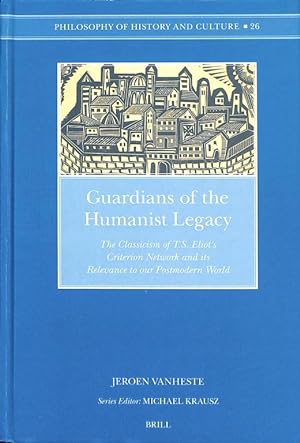
Guardians of the Humanist Legacy. The Classicism of T.S. Eliot's Criterion Network and its Relevance to our Postmodern World (diss.) (Philosophy of History and Culture 26).
Book 6 of 24: Philosophy of History and CultureVanheste, Jeroen Franciscus
ISBN 10:
9004161600 ISBN 13:
9789004161603
Published by Brill, 2007
Language: English
Condition: Used
Hardcover
Sold by Den Hertog BV, Houten, Netherlands
AbeBooks Seller since October 16, 2017
Seller rating 5 out of 5 stars

Used - Hardcover
Price:
US$ 96.80
US$ 28.48 shipping
Ships from Netherlands to U.S.A.
Ships from Netherlands to U.S.A.
Quantity: 1 available
Add to basket