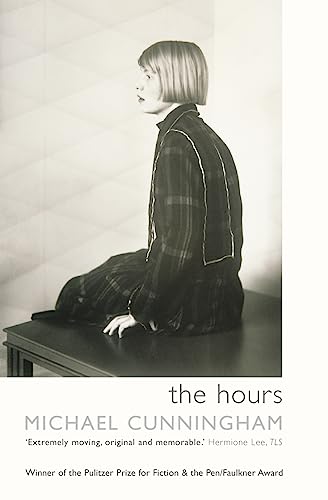
Winner of the 1999 Pulitzer and Pen/Faulkner prizes, The Hours is a daring and deeply affecting novel inspired by the life and work of Virginia Woolf. A passionate, profound and haunting story of love and inheritance, hope and despair. Exiled in Richmond in the 1920s, taken from her beloved Bloomsbury and lovingly watched over by her husband Leonard, Virginia Woolf struggles to tame her rebellious mind and make a start on her new novel. In the brooding heat of 1940s Los Angeles, a young wife and mother yearns to escape the claustrophobia of suburban domesticity and read her precious copy of Mrs Dalloway. And in New York in the 1990s, Clarissa Vaughan steps out of her smart Greenwich Village apartment and goes shopping for flowers for the party she is giving in honour of her life-long friend Richard, an award-winning poet whose mind and body are being ravaged by AIDS. These are the characters in Michael Cunningham's exquisite and deeply moving novel, which takes Woolf's life and work as inspiration for a meditation on artistic behaviour, failure, love and madness. Moving effortlessy across the decades and between England and America, Cunningham's elegant, haunting prose explores the pain and trauma of creativity and the immutable relationship between writer and reader.
The Hours is both an homage to Virginia Woolf and very much its own creature. Even as Michael Cunningham brings his literary idol back to life, he intertwines her story with those of two more contemporary women. One gray suburban London morning in 1923, Woolf awakens from a dream that will soon lead to
Mrs. Dalloway. In the present, on a beautiful June day in Greenwich Village, 52-year-old Clarissa Vaughan is planning a party for her oldest love, a poet dying of AIDS. And in Los Angeles in 1949, Laura Brown, pregnant and unsettled, does her best to prepare for her husband's birthday, but can't seem to stop reading Woolf. These women's lives are linked both by the 1925 novel and by the few precious moments of possibility each keeps returning to. Clarissa is to eventually realize:
There's just this for consolation: an hour here or there when our lives seem, against all odds and expectations, to burst open and give us everything we've ever imagined.... Still, we cherish the city, the morning; we hope, more than anything, for more.
As Cunningham moves between the three women, his transitions are seamless. One early chapter ends with Woolf picking up her pen and composing her first sentence, "Mrs. Dalloway said she would buy the flowers herself." The next begins with Laura rejoicing over that line and the fictional universe she is about to enter. Clarissa's day, on the other hand, is a mirror of Mrs. Dalloway's--with, however, an appropriate degree of modern beveling as Cunningham updates and elaborates his source of inspiration. Clarissa knows that her desire to give her friend the perfect party may seem trivial to many. Yet it seems better to her than shutting down in the face of disaster and despair. Like its literary inspiration,
The Hours is a hymn to consciousness and the beauties and losses it perceives. It is also a reminder that, as Cunningham again and again makes us realize, art belongs to far more than just "the world of objects."
--Kerry Fried