Synopsis
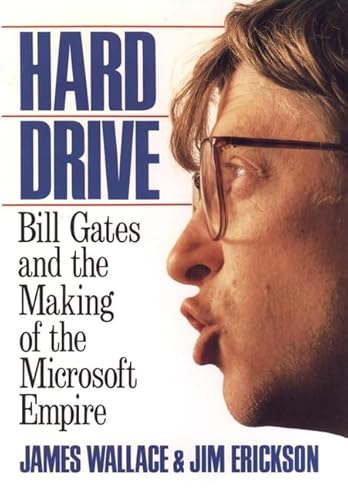
This biography chronicles William Gates' rise as the most powerful player in the computer industry--a man who has revolutionized the software industry with the incredible growth of his Microsoft company, that now threatens gigantic IBM. Reveals Gates' personal quirks and idiosyncrasies which helped fuel his fierce competitive spirit. Interviews Gates' closest friends, associates and former employees, and details IBM's as well as Apples' efforts to topple his Microsoft empire.
Reviews
In a biting biography and computer-industry expose, two Seattle Post-Intelligencer journalists here relate in dramatic detail how a moody, computer-dazzled prep-school whiz kid, a Harvard dropout at age 19, formed his own company, now Microsoft Inc., with a few friends. They developed and marketed in aggressive style a series of personal-computer software applications and operating systems, the phenomenal sales of which by some accounts have made 37-year-old William H. Gates Jr. the richest person in America. Alternately cooperating and competing with industry giants Apple, Xerox and IBM, "Chairman Bill" worked 20-hour days in Levis and loafers and relaxed by driving his Mercedes at speeds up to 150 mph, as Microsoft set industry standards in desktop-computer languages and programs. Driven and hard-driving, Gates has engendered admiration, envy, imitation, complaints of unfairness and an FTC investigation. $60,000 ad/promo; author tour.
Copyright 1992 Reed Business Information, Inc.
Two Seattle Post-Intelligencer reporters take on--and fumble- -the fascinating tale of how an archetypal nerd built a multibillion-dollar enterprise that sets the standards for PC/work- station software. In Accidental Empires (1991), Robert X. Cringely tells more in brief about William Henry Gates III (cofounder of Microsoft) and his game plan than the authors manage to do in an entire book. Wallace and Erickson do make a competent job of chronicling the dramatic rise of a quirky Harvard dropout whose technical/commercial genius coexists uneasily with an impatient, demanding, and ultracompetitive personality. They follow Gates from privileged youth at a Seattle prep school through his creation (at 19) with Paul Allen of the first computer language for PCs and beyond, to the establishment of Microsoft, which eventually made them billionaires. Along the way, the single-minded Gates, now 36, helped develop the computer operating system DOS, forged a since- ruptured alliance with IBM, and evidently became willing to do whatever it takes to keep Microsoft atop the programming heap. Among other consequences of his intimidating management style are lost friendships--and a potentially ruinous lawsuit, in which Apple seeks billions in damages for copyright infringement. But by focusing on Gates's less admirable idiosyncrasies and on anecdotal trivia, the authors miss much of the point of his empire-building ends and means. Nor, absent wider-angle perspectives on the fragmented software industry, do they convey with any real impact how Gates intends to parlay essentially mediocre technology into a perdurably dominant market position. While the authors supply many of the pieces missing from the public record, they don't quite have the whole story. A full account of Gates and his empire probably awaits someone like Cringely, with a firmer grasp on where PCs are taking the Global Village. -- Copyright ©1992, Kirkus Associates, LP. All rights reserved.
Seattle Post-Intelligencer reporters Wallace and Erickson present an in-depth portrait of Gates, the 35-year-old chairman and co-founder of Microsoft, from his early years as a young computer genius to his current status of billionaire. Throughout the work, the authors include recollections of Gates's business associates, friends, and former employees. They tell Microsoft's story from its founding in 1975 through developments in early 1992. Wallace and Erickson also chronicle the Federal Trade Commission's recent investigation of Microsoft for possible antitrust violations. The authors present a history of developments in the computer and software industry and the relationships among notable companies, including IBM, Microsoft, and Apple. Daniel Ichbiah and Susan L. Knepper's The Making of Microsoft ( LJ 11/1/91) covers the same material, but Hard Drive provides a more detailed portrait of the complex Gates as well as a closer look at the organization of Microsoft. Highly recommended.
- Lucy Heckman, St. John's Univ. Lib., Jamaica, N.Y.
Copyright 1992 Reed Business Information, Inc.
"About this title" may belong to another edition of this title.