Synopsis
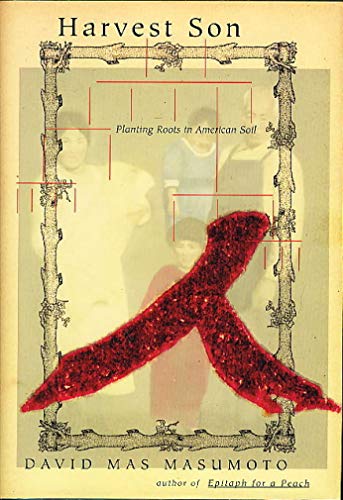
A Japanese-American farmer fondly recounts the challenges of taking over and renewing his family's farm in Del Rey, California, describing the pains and pleasures of farm work, the perseverance of his grandmother, and other topics. 16,500 first printing.
Reviews
Masumoto's Epitaph for a Peach described his love affair with a fragile, imperfect variety of peach. Here, he continues his meditation on the farm that has been in his family for three generations, reflecting on and celebrating his Japanese-American heritage as he prunes vines, digs hardpan, clears itchy grass and picks grapes. He skillfully writes on the practicalities of Thompson grapes becoming raisins and of those same divine Sun Crest peaches that never made it to market. In doing so, he reveals his sadness at never having known his grandfathers and his frustrating quest to hone the skills he needs to continue the farm. From his fertile, if sometimes inconstant, farm, he travels to the arid desert of Arizona's Gila River Relocation Center, where his family, like thousands of other Japanese Americans, were interned during WWII. Almost nothing of the camp remains but a pile of broken, thick white dishes. "I brought them back to show my parents... Dad grabbed the platter between a firm thumb and curled fingers and held it up as if to receive a helping of mash or a spoonful of beans. They exchanged a subtle grin that quickly disappeared when Dad shook his head and set down the fragment." In this evocative and lyrical pleasure, metaphors of sowing, cultivating and reaping conjoin to describe the deepest roots of sustenance and nurturing found in families. Here, Masumoto writes with a keen sense of indebtedness and gratitude to the many individuals who make up the entity he calls his family.
Copyright 1998 Reed Business Information, Inc.
The richness of Masumoto's earlier memoir (Epitaph for a Peach, 1995) about life as a Japanese-American farmer in California is generally lacking here. The problem: Masumoto never quite settles on a subject or direction. Instead, the narrator ventures all over the place, ranging from a discourse on raisins to an evocation of the community ``hall,'' and from his ``chairmanship'' of a neighbor's funeral to the joys of sweating. Some of it - s interesting; the writing is often quite good, even if disconnected or chronologically challenging. Located in Del Rey in California's Central Valley, the author - s 80-acre farm - 20 acres for peaches, 60 for grapes - was purchased by his father rather inexpensively because fully a fourth of it was considered worthless. Covered in ``hardpan,'' a layer of clay and minerals hardened into rock, the property was cleared over a period of years, ``and now lush green vines grow,'' producing as much as two tons of raisins per acre. As Masumoto prunes his grapevines, he thinks of his jiichan, his grandfather Masumoto, who arrived in California 100 years ago to work in a vineyard, though he'd never seen a grape. The author traveled to Japan after his college days at Berkeley to study and work with distant relatives, most of whom scarcely knew his family. Then he resumed working with his father on the farm, enjoying the daily grind. As in his first book, Masumoto writes wonderfully of his crops and the challenges of keeping a small farm going. If it had been presented as a collection of vignettes or essays, this might have summoned up more literary or personal energy. But ill-arranged slices of life do not a memoir make. (Author tour) -- Copyright ©1998, Kirkus Associates, LP. All rights reserved.
In this autobiographical sequel to Epitaph for a Peach (LJ 4/1/95), Masumoto describes his life growing up in a Japanese American farm family in California's Central Valley. He relates his life on the farm as a boy and his ideas about running the 80-acre spread after he took over from his father. Masumoto's experiences pruning grape vines, drying raisins, and tending the peach crop, as well as his thoughts on tractor driving, battling hardpan soils, accumulating junk, the joys of sweating, the pleasures of hard work, and other tidbits of farm life are recounted in vivid detail. He devotes a large portion of his book to discussing his Japanese heritage, including the effect of the World War II internment of Japanese Americans on his family and friends. Masumoto's account of his visit to Japan in an attempt to learn the Japanese language and find his remaining relatives is heartwarming and witty. He writes with an appealing serenity and gentle manner. Highly recommended.
-?Irwin Weintraub, Rutgers Univ. Lib., New Brunswick,
Copyright 1998 Reed Business Information, Inc.
Masumoto intersperses descriptions and observations of life on his family's farm in California's San Joaquin Valley with a history of the Masumotos in the U.S. His grandfather arrived from Japan in 1899 and established himself by working the vineyards. Yet, just when the growing Masumoto clan is feeling truly a part of this nation, World War II bursts onto the scene and they're driven into internment camps. Growing up in the 1950s, Masumoto has two clear goals: to embrace his Japanese heritage and to flee the valley as soon as possible. While in college, he visits Japan, but the experience forces him to admit that he is not really Japanese. Back home, he is a hyphenated American, balancing his life between disparate cultures. The glue that ultimately holds his life together? His and his family's deep connection to the land he writes so lovingly about. An affecting memoir. Brian McCombie
"About this title" may belong to another edition of this title.