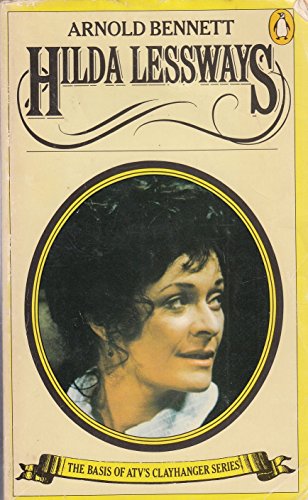
Synopsis
This work has been selected by scholars as being culturally important, and is part of the knowledge base of civilization as we know it. This work was reproduced from the original artifact, and remains as true to the original work as possible. Therefore, you will see the original copyright references, library stamps (as most of these works have been housed in our most important libraries around the world), and other notations in the work. This work is in the public domain in the United States of America, and possibly other nations. Within the United States, you may freely copy and distribute this work, as no entity (individual or corporate) has a copyright on the body of the work.As a reproduction of a historical artifact, this work may contain missing or blurred pages, poor pictures, errant marks, etc. Scholars believe, and we concur, that this work is important enough to be preserved, reproduced, and made generally available to the public. We appreciate your support of the preservation process, and thank you for being an important part of keeping this knowledge alive and relevant.
About the Author
Bennett was born in a modest house in Hanley in the Potteries district of Staffordshire. Hanley was one of the Six Towns that were joined together at the beginning of the 20th century as Stoke-on-Trent and are depicted as "the Five Towns" in some of Bennett's novels. Enoch Bennett, his father, qualified as a solicitor in 1876, and the family moved to a larger house between Hanley and Burslem. Bennett was educated in Newcastle-under-Lyme. In 1889 Bennett won a literary competition run by the magazine Tit-Bits and was encouraged to take up journalism full-time. In 1894 he became assistant editor of the magazine Woman. He noticed that the material offered by a syndicate to the magazine was not very good, so he wrote a serial that was bought by the syndicate for 75 pounds (equivalent to £10,000 in 2015). He then wrote another. This became The Grand Babylon Hotel. Just over four years later his novel A Man from the North was published to critical acclaim and he became editor of the magazine. In 1900 Bennett gave up the editorship of Woman and dedicated himself to writing full-time. However, he continued to write for newspapers and magazines while finding success in his career as a novelist. In 1926, at the suggestion of Lord Beaverbrook, he began writing an influential weekly article on books for the London newspaper the Evening Standard. One of Bennett's most popular non-fiction works was the self-help book How to Live on 24 Hours a Day. His diaries have yet to be published in full, but extracts from them have often been quoted in the British press. Bennett separated from his French wife in 1921 and fell in love with the actress Dorothy Cheston (b. 1896), with whom he stayed for the rest of his life. She changed her last name to Bennett, although they were never married. They had one child, Virginia, born in London in 1926. In 1923 Bennett won the James Tait Black Memorial Prize for his novel Riceyman Steps. Bennett died of typhoid at his home in Baker Street, London, on 27 March 1931, after returning from a visit to Paris where, in defiance of a waiter's advice, he had drunk tap water in a restaurant.
"About this title" may belong to another edition of this title.