Synopsis
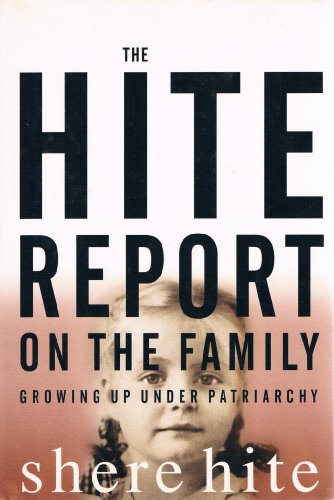
Based on the results of a survey of children and adults, the author argues that increasing divorce rates and single-mother families are welcome signs of a democratization of the family. 50,000 first printing. National ad/promo. First serial, Ms.
Reviews
Hite's latest sex report, based on some 3000 questionnaires completed by children and adults in 16 countries (50% from the U.S.), focuses on the child's developing psychosexual identity and the impact of this process on adulthood. Her guiding theme is that the patriarchal family is outmoded, sexist and authoritarian and suppresses openness between children and parents about the body. Unlike critics who decry a breakdown of the traditional nuclear family, Hite argues that the rise of diverse new family structures signals a democratizing of the family and a growing concern for women's and children's rights. Her respondents' testimonies, organized around specific themes, touch on all manner of taboo subjects (e.g., the link between childhood spankings and adult sadomasochistic fantasies; parents' erotic feelings for their children; sexual play between boys). For most children, Hite claims, growing up in single-parent families is beneficial, particularly for boys raised by their mothers. A manifesto masquerading as a scientific report, her in-depth, unusually frank survey gives voice to some of the most closely guarded secrets and feelings of women, men, girls and boys struggling to define themselves sexually. 50,000 first printing; first serial to Ms. (March-April cover story); author tour.
Copyright 1995 Reed Business Information, Inc.
Although successfully published overseas, this latest Hite Report was rejected by its original U.S. publisher, ostensibly over challenges to its methodology. Now it appears from Grove and is certain to spur still more controversy. As in Hite's other books on sexuality, the data were gathered from readers' surveys (3,000 children and adults in 16 countries), and much of the book consists of the participants' musings. These meandering, abbreviated remembrances sound like Nancy Friday's correspondents on a bad day. At least Friday was clear that her purpose was to turn on her readers. Hite attempts to trod on much higher ground, even though there's plenty of semi-juicy ramblings about the erotic feelings that pervade families, sexual identities, and the relationship between mothers and daughters, daughters and fathers, fathers and sons. But it's all presented to prove Hite's thesis: that we are living through a revolution in family life, and rather than trying to reassert outmoded "family values," we should be celebrating the death of the father-dominated family--a system that terrorized all family members, each in his or her own specific way. The last quarter of the book, which presents Hite's conclusions, seems simplistic and not particularly germane to what has come before it. There has always been a fuss about Hite's methodology, but here the theorizing itself often seems shaky ("Children are sometimes better off with a single parent than with two who are unequal and thus present the child with an insoluble loyalty conflict"); at other times, Hite's findings are just old hat ("Women are `whores' or `madonnas'; there's a mind-body split"). Given the likelihood of media confrontations between Hite's feminist supporters and a wide range of skeptics, it's a safe bet that libraries will need copies to fill requests. Still, it's hard not to conclude that the book's original publisher was on the right track. Ilene Cooper
Hite, author of controversial reports on male and female sexuality, attempts to examine the contemporary family structure in this new study. Using data from 3000 questionnaires distributed in 16 countries, she concludes that the traditional family structure is a repressive patriarchy based on the Jesus-Mary-Joseph religious icon. Hite encourages democratization of this structure with equality for males and females, but the data, presented in narrative form as quotations from responses to the questionnaire, do not support her thesis well. Appendixes full of praise from colleagues make the study appear weak. Hite seems unaware of the many changes occurring in the family life; Stephanie Coontz's The Way We Never Were: American Families and the Nostalgia Trap (LJ 9/15/92) is a better view of this subject. Although the views on family relations and sexuality expressed in the questionnaires make interesting reading, there is little scholarship here. Still, libraries may want to add this title because of Hite's popularity.
-?Barbara M. Bibel, Oakland P.L., Cal.
Copyright 1995 Reed Business Information, Inc.
"About this title" may belong to another edition of this title.