Synopsis
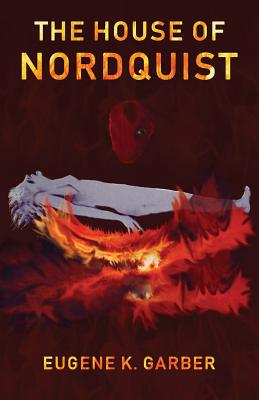
Like the crime at its core, The House of Nordquist is an unquenchable fire. Part detective story, part playful Gothic, part re-imagining of Faust, and fully compelling. Garber’s novel fulfills the promise-threat: things stranger than you wish will happen here.- Ron MacLean, HeadlongIn The House of Nordquist, the final novel of The Eroica Trilogy, Eugene K. Garber creates his most demonic character of the series. Deep in the infernal regions of the bizarre house of his mad father, the Faustian Eric Nordquist conducts an atrocious experiment. He will extract from the body of a Holocaust victim sounds for a world-changing symphony.Day after day he stands at his synthesizer transforming the sounds of a maimed body into appalling skeins of lachrymose reverberations. But his theft of the life force of his subject is not his only transgression. He sucks everyone around him into the vortex of his mad dream of a cleansing cataclysm. His most devoted follower Paul Albright not only assists in the experiment but becomes infected with unholy powers.Now, years later, the House of Nordquist burned to the ground by an unknown arsonist, Eric is on the loose with the score of his abysmal symphony. Paul is in pursuit. Can Paul find Eric and the sinister score? If he does, what will he do?The novels of The Eroica Trilogy share the common strategy of “genre iconoclasm.” In The House of Nordquist the conventions of Gothic fiction and mystery novels are radically skewed by the deflections of metafiction and indeterminacy.
About the Author
Eugene K. Garber has published six books of fiction and is the creator, with eight other artists, of EROICA, a hypermedia fiction (http://hypereroica.com/). His fiction has won the Associated Writing Programs Short Fiction Award and the William Goyen Prize for Fiction sponsored by TriQuarterly. His awards include fellowships from the National Endowment for the Arts, the National Endowment for the Humanities, and the New York State Council of the Arts. His short fiction has been anthologized in The Norton Anthology of Contemporary Fiction (1988), Revelation and Other Fiction from the Sewanee Review, The Paris Review Anthology, and Best American Short Stories.
"About this title" may belong to another edition of this title.