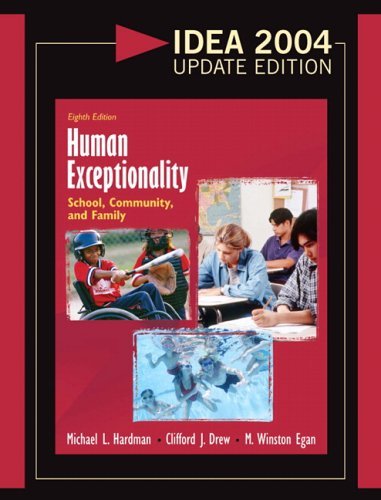
KEY BENEFIT: Complete, accessible introduction to teaching, interacting, and living with individuals with exceptionalities. Lifespan/multidisciplinary approach. KEY TOPICS: After a detailed introduction to the foundations of exceptionality, the second half of Human Exceptionality focuses on definitions, classifications, prevalence, causation, and characteristics for the major categories of exceptionality. MARKET : For teachers, therapists, students, parents, and anyone working with people with disabilities.
Teach your students to put
people before
exceptionality. Hardman/Drew/Egan, Human Exceptionality: School, Community, and Family takes a unique human approach. From detailed, personal stories about people with exceptionalities, to narratives about the people who work with those with exceptionalities, this book helps your students to see past an individual's disability and to see the person first.
With an enhanced emphasis on the educational and classroom implications for students with exceptionalities, the eighth edition retains its excellent treatment of exceptional individuals within the community and family.
“This has always been my favorite text and the only one I've ever used. . . . You've done a wonderful job!”
Mark O'Dekirk, Meredith College
“The information presented in the Hardman text is well organized and is an excellent source for students to use for review and reference.”
William Drakeford, University of Maryland
“There is a nice spirit of fun in this book. In addition to the specific content we must share with learners, we must also share our joy of the work which we do.”
Dan Baker, University of Oregon
Integrate IDEA 2004 into your course!
This IDEA 2004 Update Edition reflects the IDEA 2004 legislation in two ways:
- An “IDEA 2004” icon appears in the margins adjacent to relevant discussions throughout the book that have been revised to reflect IDEA ’04.
- “Guide to IDEA 2004” has been included as an appendix. It provides side-by-side comparison of IDEA ’04 versus the previous ’97 legislation for each of the statutes and a little friendly “background” where it will help the reader better understand the practical implications of the law.