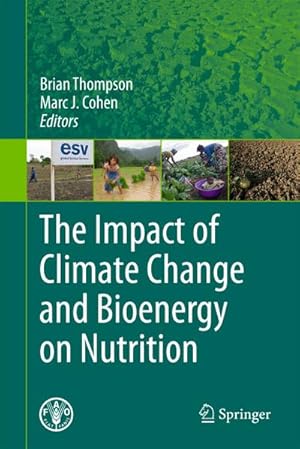
The Impact of Climate Change and Bioenergy on Nutrition
Marc J Cohen
Sold by AHA-BUCH GmbH, Einbeck, Germany
AbeBooks Seller since August 14, 2006
New - Hardcover
Condition: New
Ships from Germany to U.S.A.
Quantity: 1 available
Add to basketSold by AHA-BUCH GmbH, Einbeck, Germany
AbeBooks Seller since August 14, 2006
Condition: New
Quantity: 1 available
Add to basketDruck auf Anfrage Neuware - Printed after ordering - Climate changes will affect food production in a number of ways. Crop yields, aquatic populations and forest productivity will decline, invasive insect and plant species will proliferate and desertification, soil salinization and water stress will increase. Each of these impacts will decrease food and nutrition security, primarily by reducing access to and availability of food, and also by increasing the risk of infectious disease.Although increased biofuel demand has the potential to increase incomes among producers, it can also negatively affect food and nutrition security. Land used for cultivating food crops may be diverted to biofuel production, creating food shortages and raising prices. Accelerations in unregulated or poorly regulated foreign direct investment, deforestation and unsustainable use of chemical fertilizers may also result. Biofuel production may reduce women's control of resources, which may in turn reduce the quality of household diets. Each of these effects increases risk of poor food and nutrition security, either through decreased physical availability of food, decreased purchasing power, or increased risk of disease.The Impact of Climate Change and Bioenergy on Nutrition articulates the links between current environmental issues and food and nutrition security. It provides a unique collection of nutrition statistics, climate change projections, biofuel scenarios and food security information under one cover which will be of interest to policymakers, academia, agronomists, food and nutrition security planners, programme implementers, health workers and all those concerned about the current challenges of climate change, energy production, hunger and malnutrition.
Seller Inventory # 9789400701090
Climate changes will affect food production in a number of ways. Crop yields, aquatic populations and forest productivity will decline, invasive insect and plant species will proliferate and desertification, soil salinization and water stress will increase. Each of these impacts will decrease food and nutrition security, primarily by reducing access to and availability of food, and also by increasing the risk of infectious disease.
Although increased biofuel demand has the potential to increase incomes among producers, it can also negatively affect food and nutrition security. Land used for cultivating food crops may be diverted to biofuel production, creating food shortages and raising prices. Accelerations in unregulated or poorly regulated foreign direct investment, deforestation and unsustainable use of chemical fertilizers may also result. Biofuel production may reduce women’s control of resources, which may in turn reduce the quality of household diets. Each of these effects increases risk of poor food and nutrition security, either through decreased physical availability of food, decreased purchasing power, or increased risk of disease.
The Impact of Climate Change and Bioenergy on Nutrition articulates the links between current environmental issues and food and nutrition security. It provides a unique collection of nutrition statistics, climate change projections, biofuel scenarios and food security information under one cover which will be of interest to policymakers, academia, agronomists, food and nutrition security planners, programme implementers, health workers and all those concerned about the current challenges of climate change, energy production, hunger and malnutrition.
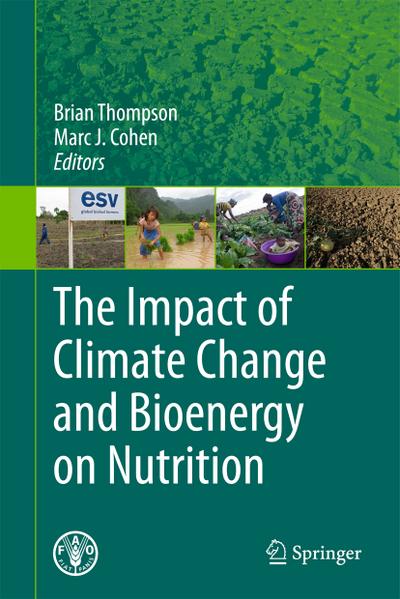
Climate changes will affect food production in a number of ways. Crop yields, aquatic populations and forest productivity will decline, invasive insect and plant species will proliferate and desertification, soil salinization and water stress will increase. Each of these impacts will decrease food and nutrition security, primarily by reducing access to and availability of food, and also by increasing the risk of infectious disease.
Although increased biofuel demand has the potential to increase incomes among producers, it can also negatively affect food and nutrition security. Land used for cultivating food crops may be diverted to biofuel production, creating food shortages and raising prices. Accelerations in unregulated or poorly regulated foreign direct investment, deforestation and unsustainable use of chemical fertilizers may also result. Biofuel production may reduce women’s control of resources, which may in turn reduce the quality of household diets. Each of these effects increases risk of poor food and nutrition security, either through decreased physical availability of food, decreased purchasing power, or increased risk of disease.
The Impact of Climate Change and Bioenergy on Nutrition articulates the links between current environmental issues and food and nutrition security. It provides a unique collection of nutrition statistics, climate change projections, biofuel scenarios and food security information under one cover which will be of interest to policymakers, academia, agronomists, food and nutrition security planners, programme implementers, health workers and all those concerned about the current challenges of climate change, energy production, hunger and malnutrition.
"About this title" may belong to another edition of this title.
General Terms and Conditions and Customer Information / Privacy Policy
I. General Terms and Conditions
§ 1 Basic provisions
(1) The following terms and conditions apply to all contracts that you conclude with us as a provider (AHA-BUCH GmbH) via the Internet platforms AbeBooks and/or ZVAB. Unless otherwise agreed, the inclusion of any of your own terms and conditions used by you will be objected to
(2) A consumer within the meaning of the following regulations is any natural person who concludes...
We ship your order after we received them
for articles on hand latest 24 hours,
for articles with overnight supply latest 48 hours.
In case we need to order an article from our supplier our dispatch time depends on the reception date of the articles, but the articles will be shipped on the same day.
Our goal is to send the ordered articles in the fastest, but also most efficient and secure way to our customers.
| Order quantity | 7 to 10 business days | 5 to 7 business days |
|---|---|---|
| First item | US$ 35.00 | US$ 35.00 |
Delivery times are set by sellers and vary by carrier and location. Orders passing through Customs may face delays and buyers are responsible for any associated duties or fees. Sellers may contact you regarding additional charges to cover any increased costs to ship your items.