Synopsis
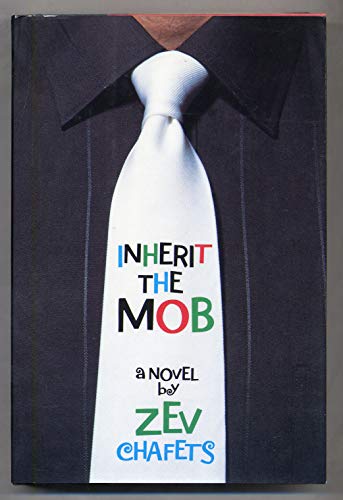
Pulitzer Prize-winning foreign correspondent William Gordon lands in the middle of a bizarre Mafia power struggle after he inherits a most unusual legacy from his late uncle, the last of the great Jewish mobsters
Reviews
In an outrageous comic send-up of Mafia genre novels, William Gordon, sardonic foreign correspondent for a New York City paper, returns home to claim the inheritance left by his dead uncle, Mafia kingpin Max Grossman. Gordon, who's in love with a lesbian actress, can collect his share of half a billion dollars only if he serves a stint as "foreign minister" for ruthless, elegant Mafia don Luigi Spadafore. But when two hit men enter the picture, Gordon and his hard-drinking journalist cohort John Farrell, who fearlessly insults the Mafia sleazeballs, want out. Enter Gordon's domineering, retired father, Albert, who enlists the services of seven of his former associates from the Jewish branch of the mob. They launch a counteroffensive, complete with 419 pepperoni pizzas, to extricate the errant son. Chafets ( Devils' Night and Other True Tales of Detroit ) zestfully deploys witty dialogue and off-the-wall characters in this fast, funny caper.
Copyright 1991 Reed Business Information, Inc.
Hilarious first novel and sendup of the Mafia, by the author of Devil's Night (1990), Members of the Tribe (1988), etc. Foreign correspondent and two-time Pulitzer Prize-winner William Gordon (real name ``Velvel'' Grossman to his Jewish family) comes home for a respite as a columnist on the Tribune, pursues his bisexual but largely lesbian movie-star girlfriend Jupiter Evans, and finds himself the main inheritor of his late uncle Max, a Jewish mobster whose ties to the Mafia go back 50 years. In fact, Uncle Max is second only to the Godfather himself, 77-year-old Don Luigi Spadafore, who sits home in Brooklyn and tries to speak as wisely as Don Corleone. When the will is read, Velvel's uncle has left him $500 million in businesses: ``fifteen percent of the action on the Brooklyn docks, a third of the union operation, the Colombian business, the lottery tickets....'' It's all there but it's not there--Don Luigi has assumed full ownership. However, Don Luigi's consigliere Carlo Sesti has had an inspired idea: to take Velvel into the family's more legitimate operations, on a $5 million retainer, plus one third of the future haul, if prizewinner Gordon will use his entree with the more crooked world leaders to expand the mob's territory on a global basis. Gordon feels burnt out as a columnist, thinks that endless wealth will help Jupiter resolve her bisexual problem, says yes. His older, closest friend, deputy city editor John Farrell, signs himself on as Velvel's consigliere for dealing with Carlo Sesti. Farrell is an irrepressibly outrageous drunk, the fount of the novel's bubbling fun, and his ``masterminding'' leads Velvel and himself into a full-scale war with Don Luigi's vast army of hoods. Freshness everywhere, especially when Velvel goes on Peter Jennings's evening news show to describe Don Luigi: ``This Luigi Spadafore is a ridiculous old man who sits around in a smoking jacket covered with spaghetti sauce and talks in parables that would embarrass a third grader.'' -- Copyright ©1991, Kirkus Associates, LP. All rights reserved.
Pulitzer Prize-winning foreign correspondent William Gordon receives word at his uncle's funeral that he has inherited the power to become a major player in the East Coast Mafia. He is encouraged by his wise-cracking newspaper buddy John Farrell, and together they enter the world of "goodfellas," with its gangland power plays, dirty double crosses, and murderous mayhem. At one point, with their lives in danger, Gordon and his "consigliere" Farrell enlist the help of some retired Jewish mobsters to try to beat the underworld at its own game. The book is amusing, but it's not as smoothly convincing or energized as other books in this genre. Israeli Chafets's first novel attempts but somewhat misses the feel of Tom Wolfe's Bonfire of the Vanities and Richard Condon's Prizzi's Honor , whose idiosyncratic characters caught in absurd situations represent urban and ethnic satire at its best. Still, this formulation of an ever-popular topic, the Mafia, is the stuff of many a successful escapist movie and many a successful escapist novel as well.
- David Nudo, New York
Copyright 1991 Reed Business Information, Inc.
"About this title" may belong to another edition of this title.