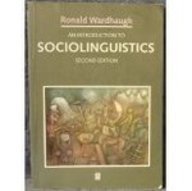
Synopsis
The second edition of this textbook has been thoroughly revised to include discussion of developments in sociolinguistics since the mid-1980s, referring in the process to some 100 recent books and papers. The book provides a comprehensive coverage of most of the topics dealt with in courses described as either "sociolinguistics" or "the sociology of language". Ronald Wardhaugh examines in full - dialect, language variation, pidgin and Creole languages, language change, ethnography, language and gender, and social codes. He gives a useful analysis of statistical methodology and a comprehensive introduction to the central topics of sociolinguistics. Each topic dealt with concludes with questions for discussion in the classroom, and references for further reading.
Book Description
Nearly twenty years ago, Ronald Wardhaugh provided the world of sociolinguistics with a popular and accessible textbook for introductory students. Keeping in step with this ever-changing field, the fifth edition has been thoroughly revised with 130 new and updated references and increased emphasis on issues of identity, solidarity, and power. Extensive discussion topics and recommendations for further reading accompany each chapter and featured topics include: language dialects, pidgins and creoles, speech communities, variation, words and culture, ethnographies, solidarity and politeness, talk and action, gender, disadvantage, and planning. This classic in the field assumes little previous knowledge of linguistics, anthropology, or sociology and may be used at an introductory level or as a supplementary text in higher-level courses.
"About this title" may belong to another edition of this title.