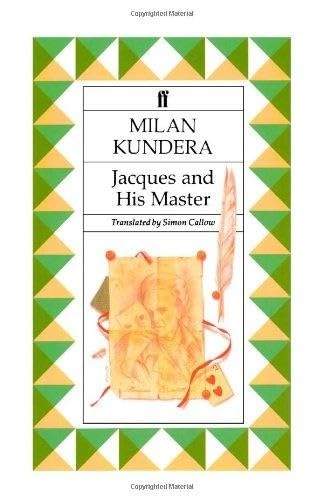
Synopsis
En 1972, el joven director de teatro frances Georges Werler fue a ver a Milan Kundera a Praga y a su regreso consiguio, pese a los controles de la frontera, introducir en Francia el manuscrito de su obra de teatro Jacques y su amo. Kundera la habia escrito despues de la invasion sovietica, cuando toda su obra, pasada y futura, habia quedado borrada de las letras checoslovacas. En esta muy libre «variacion sobre Diderot», Kundera rinde un homenaje al escritor y filosofo frances que le ayudo a sobrevivir en un periodo tan dificil. Asimismo, se añaden dos textos ineditos en torno a esta uno del propio Milan Kundera y otro del estudioso François Picard. Tres historias de amor se entrecruzan durante el viaje que emprenden Jacques y su la del amo, la de Jacques y la de Madame de la Pommeraye; tres historias que se entremezclan polifonicamente, donde cada una es, a su vez, variacion de la otra, y juntas conforman una comedia sobre los problemas existenciales de la pasion amorosa, los celos, la venganza y el destino. / In 1972, the young French theater director Georges Werl went to see Milan Kundera his return to Prague and succeeded, despite the controls on the border, to introduce in France the manuscript of his play Jacques and his master. Kundera had written after the Soviet invasion, when all his work, past and future, had been cleared of the Czechoslovak letters. In this very free ""variation on Diderot,"" Kundera pays tribute to French writer and philosopher who helped him survive in a very difficult period. It also added two unpublished texts on this one's own Milan Kundera and one scholar Francois Picard. Three love stories intersect during the journey they undertake Jacques and his the master, that of Jacques and Madame of the Pommeraye, three stories that intertwine Polyphonic, where each is, in turn, changes the the other, and together make up a comedy about the existential problems of the passion of love, jealousy, revenge and fate.
From the Back Cover
Jacques and His Master is a deliciously witty and entertaining "variation" on Diderot's novel Jacques le Fatalist, written for Milan Kundera's "private pleasure" in the aftermath of the Russian invasion of Czechoslovakia.
When the "heavy Russian irrationality" fell on Czechoslovakia, Milan Kundera explains, he felt drawn to the spirit of the eighteenth century—"And it seemed to me that nowhere was it to be found more densely concentrated than in that banquet of intelligence, humor, and fantasy, Jacques le Fataliste."
The upshot was this "Homage to Diderot," which has now been performed throughout the United States and Europe. Here, Jacques and His Master, newly translated by Simon Callow, is a text that will delight Kundera's admirers throughout the English-speaking world.
"About this title" may belong to another edition of this title.