Synopsis
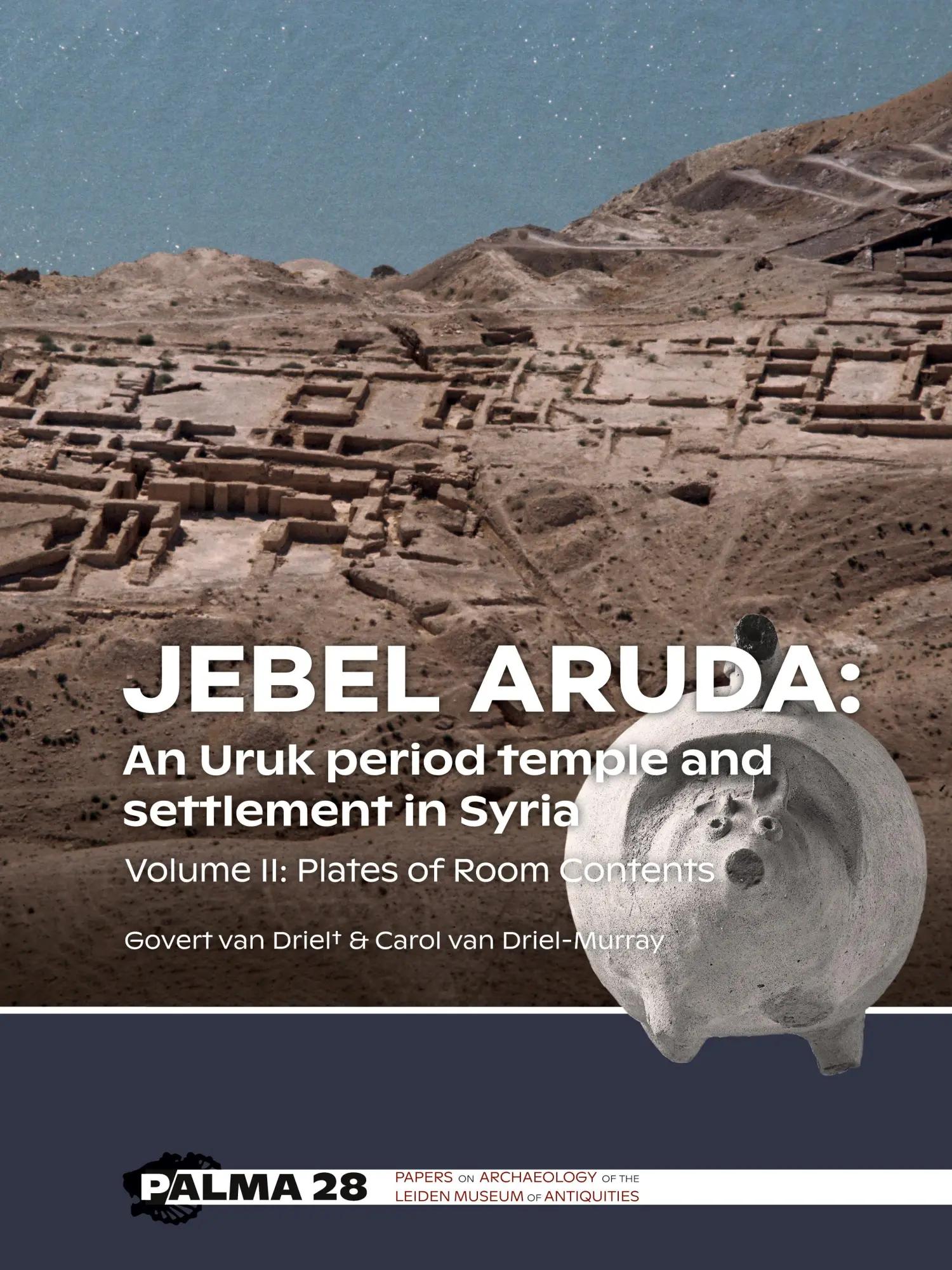
Jebel Aruda, a prominent mountain ridge overlooking the Taqba Dam lake in northern Syria, was the location of a remarkable settlement that flourished between c. 3300 and 3100 BC during the so-called Uruk period. For the inhabitants the sacredness of this high place, evidenced by the discovery of a large temple complex, seems to have taken precedent over its impractical location far above the valley of the Euphrates River. The site was destroyed under unknown circumstances, leaving behind the spectacular remains of a well preserved temple complex and numerous houses filled with a rich collection of material culture and administrative tools such as bullae and tablets.
A Dutch team excavated the site between 1972 and 1982 while the Tabqua Dam was under construction. These two volumes present the results of these excavations and subsequent research of the remains, with special emphasis on the relationship between the domestic architecture and the finds.
These richly illustrated volumes aim to facilitate further research and analysis of an exceptional, short-lived Uruk period settlement, comprising domestic architecture associated with a monumental temple complex. It is intended to appeal to readers interested in Mesopotamia and ancient Syria, as well as archaeologists concerned with architectural and locational analysis in a broader perspective.
Volume I presents the results of the excavation. In Volume II the contents of each individual house are listed and illustrated as discrete room assemblages, with the specific intention of making the evidence available for more detailed analysis of the relationship between material culture and architecture and to stimulate further research into aspects such as identity and the social structure of the settlement surrounding the temples.
Table of Contents
VOLUME II: PLATES
Introduction
Abbreviations
Concordance I: Room Numbers
Concordance II: Registered Find Numbers
Concordance III: Registered Sample Numbers
Illustrations of artefacts from each room context by House Plates 1-206
About the Author
Govert van Driel (1937-2002) was lecturer in Mesopotamian History and Archaeology at the University of Leiden, and participated in several excavations in Turkey and Syria before continuing the excavations on Jebel Aruda. His main research interest lay in the social and economic history of Mesopotamia, in particular of the Neo-Babylonian period, as documented in contemporary archives. He contributed regularly to the Bulletin of the Sumerian Agriculture Group with articles on agriculture, irrigation and husbandry that combined written sources with archaeological evidence. His study of Mesopotamian prebends, taxation and land use ‘Elusive Silver: in search of a role for a market in an agrarian environment’ was published posthumously in 2002.
Carol van Driel-Murray (1950) obtained her PhD in 1987 at Amsterdam University where she taught the Archaeology of the Roman Provinces till 2012, when she joined the staff of the Faculty of Archaeology at Leiden University to teach the same subject till her retirement in 2015 and beyond.
"About this title" may belong to another edition of this title.