Synopsis
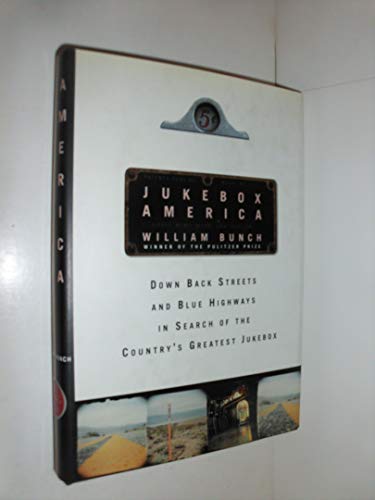
Imagine John Steinbeck's Travels with Charley, to a soundtrack of Patsy Cline, Elvis Presley, and Frank Sinatra: Three years ago, Pulitzer Prizewinning journalist Will Bunch heard Nancy Sinatra's "These Boots Are Made for Walkin'" blaring from a New York City jukebox, and he knew he'd found his calling. He had to find America's Greatest Jukebox.
What he was looking for wasn't the chrome-adorned item itself; it was the unique musical collection, the joyful, anarchic alchemy of golden hits and forgotten 45's that only an unsung, back-of-the-bar jukebox could offer. But more, much more that this, what he was looking for represented his youth - and the youth of his generation, the Rear Guard Baby Boomers, reaching back to the late nights and easy life of their twenties as thirtysomething marches on. He went to Detroit and Seattle, Chicago and Baltimore, the Mississippi Delta and Hoboken, New Jersey. He hit bars called the 924 Club and Rosa's and Honest? John's Bar and No Grill; he found vintage Seeburgs, sterile CD boxes, and, in one off-the-path stop, a juke operated via a jerry-rigged tape deck behind the bar.
After thousands of miles and thousands of quarters, he did find, in as unlikely a place as any, the Juke of the Covenant.
And, along with that fleeting youth, he found a piece of America's soul.
Like Route 66 or Blue Highways, Jukebox America is a song of America lost and found again; like the Beatles "Twist and Shout" or an old Four Tops record, it is a one-of-a-kind, pure driven pleasure.
Reviews
Bunch, a Pulitzer Prize-winning reporter for New York Newsday, became hooked on an unusual brand of nostalgia. After a quasimystical experience in a West Side Manhattan bar, he embarked upon a quest for the country's greatest jukebox-or rather for the greatest jukebox collection representing the golden 45s of his youthful recollection. In this account, he tells of visiting bars in Chicago; Hoboken, New Jersey; Greenville, Mississippi; and beyond, recounting conversations and adventures from his somewhat patchwork geographic, as well as personal, journey. Most absorbing are his talks with the locals as they reminisce about the early roots of the jukebox's greatest stars (Frank Sinatra, Patsy Cline, and more). This breezy quest will appeal to pop and country music fans and their libraries.
Carol J. Binkowski, Bloomfield, N.J.
Copyright 1994 Reed Business Information, Inc.
Pulitzer Prize-winning journalist Bunch recounts his search for America's "best" jukebox, somewhat ambiguously defined as the one whose selection of songs is "in perfect sync with its time and place." The book's subtext, however, is generational angst. Self-classified as a member of "Generation Y," Bunch takes up his mission as an expression of the restless, youthful energy he fears will be suppressed by his recent decision to marry and move to the suburbs. His anxiety about his personal shift in direction translates into concern about cultural changes: the jukebox, a symbol of regional identity and cultural diversity, is threatened by the increasing homogenization of society. While Bunch does find pockets of authenticity in rural Mississippi and in inner-city Chicago and Detroit, he juggles too many thematic balls--jukeboxes, his personal life, the state of American society--to maintain a clear focus. Portraits of individual keepers of the jukebox faith met along the way are memorable; ultimately this volume is more successful as an American travelogue than as a music-lover's journal.
Copyright 1994 Reed Business Information, Inc.
Bunch traces his search for ``The Jukebox of the Covenant'' while also describing his maturing from a footloose reporter to a married father living in the ``exurbs.'' Pulitzer Prize-winning Newsday reporter Bunch is nostalgic for an America that may have never existed. His paradigm is the neighborhood bar, where the working-class stiff could hoist a brew while sitting next to a rocket scientist (or so Bunch would like to imagine). The jukebox is the ultimate symbol of ``freedom of choice'': For a mere nickel, the barfly could choose the music he wanted to hear. Inspired by a visit to a New York bar, Bunch hears Nancy Sinatra singing ``These Boots Are Made for Walkin' '' and interprets it as a statement of mission. He begins his journey in Hoboken; revisits a boyhood bar where his grandfather took him after fishing; and moves on to, among others, Chicago's South Side; the Mississippi blues belt and Cajun country; the nouveau art-rock capital, Seattle; and the burnt-out inner city of Detroit. Bunch has a good gift for gab, describing the chilly reception he received at a tiny Mississippi bar, where a patron ``glared at [me] the entire time like [I was] carrying a stack of Mantovani records.'' But his enthusiasm hides a thin knowledge of music, so he misses many opportunities. Although he crosses paths with the great Cajun accordion player Marc Savoy, he focuses instead on a marginal blues musician named T-Model Ford. Ultimately, Bunch is more interested in the mythology of juke joints than in the reality, ignoring the violence, alcoholism, and grinding poverty. He also spends many an hour fretting over the wife and child he left at home, finding his roots in the ``condo-crazed nether land'' where he lives. Not an unenjoyable ride, but not an apocalyptic vision, either. A watered-down version of Blue Highways for the Miller Lite crowd. -- Copyright ©1994, Kirkus Associates, LP. All rights reserved.
Yuppie journalist Bunch, a self-proclaimed Rear Guard Baby Boomer, takes off on a quest for the best jukebox in the country. In the process, he intends to bear witness to a bit of Americana rapidly becoming extinct. Jukeboxes saw their heyday several decades ago; now, with the advent of compact discs, stricter laws regarding drinking and driving, and encroaching suburbanization, the roadhouses that were the traditional venue for jukeboxes are, Bunch finds, down on their luck. Nevertheless, with Elvis Presley, Patsy Cline, and Frank Sinatra as his spiritual guides, Bunch travels to Hoboken, hoping to confirm a rumor of an all-Sinatra jukebox; to Chicago and vicinity to meet a guy named Dale Evans, the human jukebox, and to visit the Rock-Ola Manufacturing Corp., where workers once cranked out 125 jukeboxes daily (they're down to 30 or so today); to Greenville, Mississippi, where juke joints rule over jukeboxes; and finally, to Detroit, where, at Honest? John's Bar and No Grill, Bunch found what he considered to be the best jukebox . . . at least for three minutes. An entertaining taste of American popular culture. Benjamin Segedin
"About this title" may belong to another edition of this title.