Synopsis
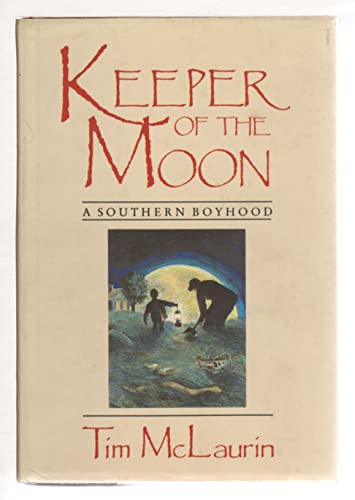
Recounting his journey toward recovery from bone marrow cancer, the author describes his childhood in the South and his experiences with cancer treatment
Reviews
His childhood home in North Carolina was a "physical heaven,' ' recalls novelist McLaurin ( The Acorn Plan ), despite the hardscrabble lot of his rural family. Capturing the grittiness of Southern poverty as well as the abundance of joy in its midst, he composes a wistful paean to a southland that has nearly vanished. One of five children raised by a resourceful mother and alcoholic father, he became a handler of poisonous snakes and a youthful stargazer (hence the title) while developing a thirst for a larger world. Also featured are earthy Southern family members and friends, their eccentric behaviors and knack for knockabout fun. McLaurin, who overcame bone cancer with a marrow transplant from a sibling, pays tribute to his heritage in this lively, memorable memoir.
Copyright 1991 Reed Business Information, Inc.
A brush with death causes southern novelist McLaurin (Woodrow's Trumpet, 1989; The Acorn Plan, 1988) to reflect, with unflinching honesty and seductive, unsentimental passion, on what his North Carolina heritage has meant to him. Forget those treasured images of mint juleps and magnolia blossoms. McLaurin's Cape Fear River Valley in rural North Carolina is a land where young boys take part in breech-birthing hogs, dance excitedly around dead-drunk daddies passed out in their own vomit, refuse to eat food touched by black hands--and end up in jail, church, the military, or, most likely, dead by age 35. Raised in a two-bedroom farmhouse with four brothers, a sister, a dad who worked in a bakery and tried to raise a little money off the land, and without an indoor bathroom, McLaurin met a different fate for no better reason, he claims, than an inexplicable need to challenge himself with the unfamiliar. While his younger brothers seemed content to accept the working-class lives that awaited them, McLaurin escaped by becoming a basketball hero in high school, a Marine after graduation, a collector of poisonous snakes while working as a Pepsi salesman, and a Peace Corps volunteer after he married his second, upper-middle-class wife. Still, McLaurin remained much more a part of the rural South than apart from it, as he realized at age 36 when he was diagnosed with cancer and his family gathered around to donate the bone marrow that would save him and to offer commiseration and comfort. His gratitude is mirrored here in these unsanitized recollections of the schoolhouse cruelties, bloody cockfights, drunken brawls, gruesome deaths and suicides, and moments of beauty that make up the life he nearly lost. A powerful work--and a welcome record of a rapidly fading way of life. -- Copyright ©1991, Kirkus Associates, LP. All rights reserved.
Readers of this tedious coming-of-age memoir hoping for insight on the "real South" will only find here the pretentious manly cliches that Esquire magazine loves so much. The men who populate novelist McLaurin's ( Woodrow's Trumpet , LJ 8/89) North Carolina childhood are hard drinkin', hard livin', colorful characters, while the women are either strong, tough matriarchs (McLaurin's mother) or seductive bimbos (his first wife). (McLaurin's patronizing attitude toward women is particularly annoying; he describes his future second wife as "a fine woman who . . . would birth my two children.") A shame really, because hidden under the overwritten portentous prose is the nugget of a powerful book; McLaurin's account of his struggles against a rare form of bone cancer and his younger brother's gift of bone marrow is the only part where his book comes alive. Not recommended. Librarians should stick to Harry Crews's classic A Childhood ( LJ 9/15/78).
- Wilda Williams, "Library Journal"
Copyright 1991 Reed Business Information, Inc.
"About this title" may belong to another edition of this title.