Kitchen Sink Realisms Format: Paperback
Language: English
Published by University of Chicago press, 2015
- Softcover
- New

Seller: INDOO, Avenel, NJ, U.S.A.INDOO
5-star seller
AbeBooks seller since August 9, 2004
Softcover
Condition: New
US$ 46.08
Free Shipping
Ships within U.S.A.
Quantity: Over 20 available
Add to basketFree 30-day returns
Item description from seller
Brand New.
Seller Inventory # 9781609383756
- Title
- Kitchen Sink Realisms Format: Paperback
- Author
- Dorothy Chansky
- Publisher
- University of Chicago press
- Publication year
- 2015
- Condition
- New
- Binding
- Soft cover
- Language
- English
- ISBN 10
- 1609383753
- ISBN 13
- 9781609383756
- Series
- Book 26 of 43: Studies Theatre Hist & Culture
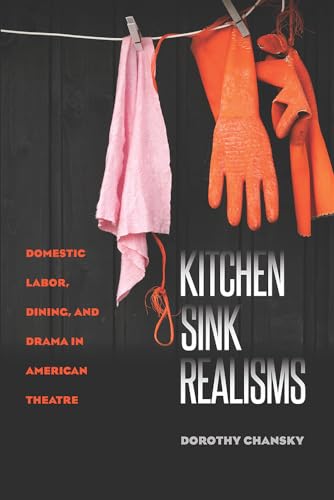
From 1918’s Tickless Time through Waiting for Lefty, Death of a Salesman, A Streetcar Named Desire, A Raisin in the Sun, and The Prisoner of Second Avenue to 2005’s The Clean House, domestic labor has figured largely on American stages. No dramatic genre has done more than the one often dismissively dubbed “kitchen sink realism” to both support and contest the idea that the home is naturally women’s sphere. But there is more to the genre than even its supporters suggest.
In analyzing kitchen sink realisms, Dorothy Chansky reveals the ways that food preparation, domestic labor, dining, serving, entertaining, and cleanup saturate the lives of dramatic characters and situations even when they do not take center stage. Offering resistant readings that rely on close attention to the particular cultural and semiotic environments in which plays and their audiences operated, she sheds compelling light on the changing debates about women’s roles and the importance of their household labor across lines of class and race in the twentieth century.
The story begins just after World War I, as more households were electrified and fewer middle-class housewives could afford to hire maids. In the 1920s, popular mainstream plays staged the plight of women seeking escape from the daily grind; African American playwrights, meanwhile, argued that housework was the least of women’s worries. Plays of the 1930s recognized housework as work to a greater degree than ever before, while during the war years domestic labor was predictably recruited to the war effort—sometimes with gender-bending results. In the famously quiescent and anxious 1950s, critiques of domestic normalcy became common, and African American maids gained a complexity previously reserved for white leading ladies. These critiques proliferated with the re-emergence of feminism as a political movement from the 1960s on. After the turn of the century, the problems and comforts of domestic labor in black and white took center stage. In highlighting these shifts, Chansky brings the real home.
In analyzing kitchen sink realisms, Dorothy Chansky reveals the ways that food preparation, domestic labor, dining, serving, entertaining, and cleanup saturate the lives of dramatic characters and situations even when they do not take center stage. Offering resistant readings that rely on close attention to the particular cultural and semiotic environments in which plays and their audiences operated, she sheds compelling light on the changing debates about women’s roles and the importance of their household labor across lines of class and race in the twentieth century.
The story begins just after World War I, as more households were electrified and fewer middle-class housewives could afford to hire maids. In the 1920s, popular mainstream plays staged the plight of women seeking escape from the daily grind; African American playwrights, meanwhile, argued that housework was the least of women’s worries. Plays of the 1930s recognized housework as work to a greater degree than ever before, while during the war years domestic labor was predictably recruited to the war effort—sometimes with gender-bending results. In the famously quiescent and anxious 1950s, critiques of domestic normalcy became common, and African American maids gained a complexity previously reserved for white leading ladies. These critiques proliferated with the re-emergence of feminism as a political movement from the 1960s on. After the turn of the century, the problems and comforts of domestic labor in black and white took center stage. In highlighting these shifts, Chansky brings the real home.
"Synopsis" may belong to another edition of this title.
About the Author
Associate professor of theatre and director of the Humanities Center at Texas Tech University, Dorothy Chansky writes about American theatre, audiences, feminist theatre, and translation. She is the author of Composing Ourselves: The Little Theatre Movement and the American Audience and many articles, and coeditor of Food and Theatre on the World Stage. She writes criticism for New York Theatre Wire. She lives in Lubbock, Texas, and New York City.
"About the title" may belong to another edition of this title.
Shipping rates within U.S.A.
| Item | 5 to 14 business days | 5 to 14 business days |
|---|---|---|
| First item | US$ 0.00 | US$ 0.00 |
Payment methods
Seller's business information
Websew.com Inc
22C Cragwood Road
Avenel, NJ U.S.A. 07001
Terms of sale
We sell brand new books from the publisher.
Shipping terms
Shipping costs are based on books weighing 2.2 LB, or 1 KG. If your book order is heavy or oversized, we may contact you to let you know extra shipping is required.