Synopsis
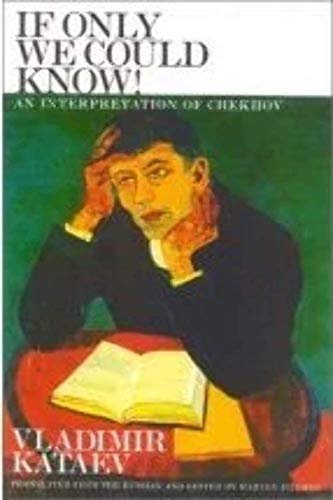
Mr. Kataev examines Chekhov's major tales, stories, and plays, pointing out patterns of development in Chekhov's approach to characters and themes, and tracing the roots of Chekhov's ideas as expressed through his plots. He quietly undermines many conventional (and persistent) approaches to Chekhov, Western as well as Russion, and establishes a radically new position of his own. Offers the reader fresh insights...enhances our understanding....The book should open a new and most welcome chapter in Chekhov criticism. -Simon Karlinsky. Unquestionably one of the two major studies of Chekhov by Russian critics during the twentieth century. -Karl D. Kramer
Reviews
This carefully edited volume offers three works on Chekhov by Moscow University scholar Kataev. Kataev's aim is to explain the great humanistic and open-minded world of Chekhov, in which each character or incident is unique and specific; for Chekhov, large judgments and absolute pronouncements are a violation of the sacred individualization of life. Among the stories discussed, Kataev's interpretations of "The Black Monk" and "The House with a Mezzanine" are especially insightful; in analyzing the four major plays, he offers a discussion of The Cherry Orchard that effectively articulates his ideas of Chekhov's entire oeuvre. Kataev's knowledge of modern criticism and of the writers and critics who were Chekhov's contemporaries is exemplary; even his medical professor, G.A. Zakharin, is shown to be a major influence. Kataev's comparisons of Tolstoy and Chekhov frame many of the main ideas. An excellent job: recommended for literature and Russian studies collections. Gene Shaw, NYPL
Copyright 2002 Reed Business Information, Inc.
The title, a line of Olga's in Chekhov's Three Sisters, captures the frustration of interpreting the works of that master storyteller and dramatist. Kataev carefully examines the disparate artistic personae Chekhov offers to scholars, presenting those often contradictory characterizations objectively. In each of Chekhov's major works, Kataev reveals different aspects of his unique, troubled genius and new, occasionally paradoxical dimensions of his philosophy. Kataev's great achievement, however, lies in making the reader appreciate the subtlety with which Chekhov, whatever he thought, allowed his characters to live and act apart from their creator. Instead of forcing them to represent particular views or ideas, Chekhov rendered the perspectives and deep desires of the characters, never forcing himself upon them, always unabashedly loving them for themselves. If he demonstrates any constant philosophical stance, then it is simply that one should not take one's own view as the truth. By allowing him to breathe without categorization, Kataev gives Chekhov the same life and sense of authenticity that he granted his beloved creations. Will Hickman
Copyright © American Library Association. All rights reserved
"About this title" may belong to another edition of this title.