Synopsis
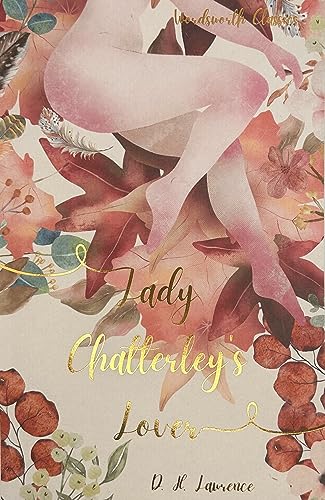
Lady Chatterley’s Lover is the novel with which D.H. Lawrence is most often associated. First published privately in Florence in 1928, it only became a world-wide best-seller after Penguin Books had successfully resisted an attempt by the British Director of Public Prosecutions to prevent them offering an unexpurgated edition. The famous ‘Lady Chatterley trial’ heralded the sexual revolution of the coming decades and signalled the defeat of Establishment prudery. Yet Lawrence himself was hardly a liberationist and the conservativism of many aspects of his novel would later lay it open to attacks from the political avant-garde and from feminists. The story of how the wife of Sir Clifford Chatterley responds when her husband returns from the war paralysed from the waist down, and of the tender love which then develops between her and her husband’s gamekeeper, is a complex one open to a variety of conflicting interpretations. This edition of the novel offers an occasion for a new generation of readers to discover what all the fuss was about; to appraise Lawrence’s bitter indictment of modern industrial society, and to ask themselves what lessons there might be for the 21st century in his intense exploration of the complicated relations between love and sex.
About the Author
D. H. Lawrence was born on September 11, 1885, in Eastwood, Nottinghamshire, England. He began school just before the age of four, but respiratory illness and a weak constitution forced him to remain home intermittently. Two months before his sixteenth birthday, he went to work as a clerk in a badly ventilated factory, and eventually contracted pneumonia. After a long convalescence, he got a job as a student teacher, but privately he resolved to become a poet. He began writing seriously in 1906 and entered University College, Nottingham, to earn his teacher's certificate. He published his first poems in the English Review in 1909. When he contracted pneumonia a second time, he gave up teaching. His first two novels, The White Peacock and The Trespasser, were published in 1911 and 1912. About three weeks after the publication of The Trespasser, he left England with Frieda Weekley, née von Richthofen, the German wife of Ernest Weekley, a British linguist who had been his French and German instructor at University College. He wrote the final version of his autobiographical novel Sons and Lovers (1913)--begun when his mother was dying of cancer in 1910--during their year-long courtship in Germany and Italy. It was immediately recognized as the first great modern restatement of the oedipal drama, but, like most of Lawrence's novels during his lifetime, sold poorly. They married in London in July 1914, immediately after Frieda's divorce became final, and lived peripatetically and in relative poverty. They spent World War I in England. Lawrence, exempt from active service because of his health, wrote The Rainbow and Women in Love, arguably his two greatest novels. The former was seized and burned by the police for indecency in November 1915, two months after publication; Lawrence was unable to find a publisher for the latter until six years later. Composition of these two novels coincided with bouts of erratic behavior in Lawrence that bordered on mental instability, sexual confusion and experimentation that threatened to undermine his marriage, and endless health reversals, including a diagnosis of tuberculosis. The Lawrences departed for Europe in late 1919 and spent most of the next two years in Italy and Germany. The Lost Girl, a novel, was published in 1920 and received the James Tait Black Memorial Prize the following year. In the spring of 1923, after moving to Mexico, he and Frieda separated temporarily. He toured the western United States and briefly returned to Mexico; she moved to London. Kangaroo, his novel of Australia, and Birds, Beasts, and Flowers, a collection of poems, were published in the fall. He returned to Frieda in the winter. They went to New Mexico again in the spring of 1924; he suffered bouts of influenza, malaria, and typhoid fever the next year. The Lawrence's eventually resettled in Italy in 1926. He began writing his last novel, Lady Chatterley's Lover, in 1926. It was published two years later and banned in England and the United States as pornographic. An avid amateur painter, a selection of his paintings--grossly rendered, full-figured representational nudes--was exhibited in London in 1929. The show was raided on July 5 by the police, who removed thirteen of the canvases. Lawrence coincidentally suffered a violent tubercular haemorrhage in Italy the same day. He went to Bavaria to undergo a cure--it was unsuccessful--and in 1930 entered a sanatorium in Vence, France, where treatment similarly failed. He died in a villa in Vence on the night of March 2, aged 44, and was buried in a local cemetery. His body was eventually disinterred and cremated, and his ashes transported to Frieda Lawrence's ranch outside Taos, New Mexico. In addition to numerous plays and collections of poetry, his novels The Virgin and the Gypsy and Mr. Noon were published posthumously.
"About this title" may belong to another edition of this title.