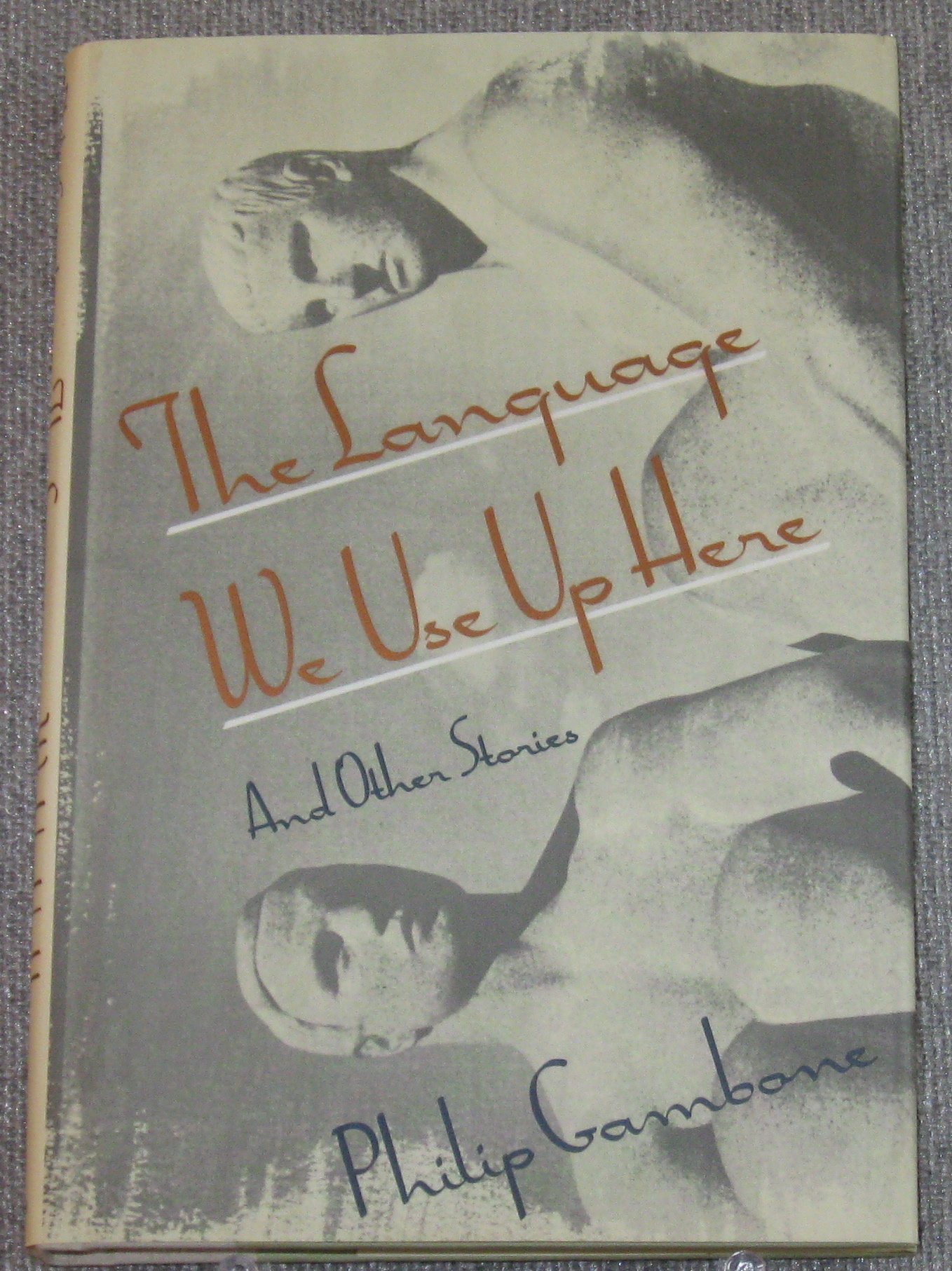
Synopsis
This collection of stories about gay men, who are successful teachers, lawyers, managers, and college students, revolves around their search for affection, companionship, and spiritual satisfaction
Reviews
Most of the characters in this impressive first collection are in their 30s, struggling with long-term relationships and trying to deal with the long, uninterrupted stretch of adulthood ahead of them. Though the characters are also gay, these stories aren't about the fact of homosexuality or coming out, but rather about the unique problems these men face as they approach midlife without benefit of institutions available to others, such as marriage. In the title story, set like the rest in Boston, Robert, a white, "good-intentioned" liberal, makes a desperate but "politically correct" effort to free Bunkie, an inexperienced, black 20-year-old newly arrived from Alabama, of the influence of his flamboyant uncle. Similarly, in "Initiating Him," middle-aged Marty befriends a confused younger man, recalling his own initiation into a world of others like himself: "I wanted to dump the entire cornucopia of our history and culture onto his lap." "Saying the Truth" subtly probes an overpowering subject, AIDS, with plenty of emotion, none of it cheap or sentimental. With these well-drawn and well-chosen lives, Gambone helps move fiction about gays out from under the limiting rubric of "gay literature." As with all good writing, these stories focus on the particular as a way to explore the universal.
Copyright 1991 Reed Business Information, Inc.
Sixteen stories that mainly contrast the lives of gay men approaching middle age--men who've been at peace with their sexual orientation--with the psychological adjustments necessary for their childhood families to make. In his first book, Gambone evokes an oddly low-key world, full of New Yorker-like bourgeoisie who simply happen to be homosexual or to have a homosexual in the family. The two noteworthy pieces are the title story and ``Enrollment,'' the latter concerning Nick, from a close Italian family, whose cousin Monica marries into a Jewish clan. The story traces the family's acceptance of Nick's homosexuality, and Nick's small epiphany, at a naming ceremony for Monica's child, where the idea of family becomes almost cosmic. In the title piece, Robert Garthside, a yuppie, meets up with Bunkie, a black southern boy who lives with his uncle Otto. Garthside falls in love with Bunkie but can't accept that Bunkie and Otto, who swishes and camps, are not interested in the political consciousness-raising so de rigueur to urban homosexuals. Of the rest, largely well-crafted notes in a minor key, the most successful include ``Salon,'' about a young man's passage through a chic salon (a ``statement--in turquoise, peach, and grey'') to the realization that the salon's false glamour can't save him from everydayness, his inability to figure out what ``attraction and flirtation and boredom are all about''; and ``Fatherly,'' which forces a self-righteous man to confront the eccentric but healing power of a Kojak-like Episcopal priest. The others are minimalist slices of life about flirtations, breakups, and ``the knowledge of our needs.'' Overall, a mild-mannered look at middle-class homosexuals trying to fit themselves gracefully into the families they come from. -- Copyright ©1991, Kirkus Associates, LP. All rights reserved.
The strength of this collection of 16 stories (ten of which have appeared previously in an assortment of journals) lies in its thematic content and not in brilliant language or particularly strong characterizations. What interests Gambone are the ways in which gay men attempt to come to terms with life once they have gotten beyond the coming-out experience. It is thus aimed more at the "thirtysomething" crowd than those still caught up in "the dance." The AIDS reality and the difficulty of admitting one's fears is addressed in a moving story titled "Saying the Truth." The title story exposes, in the context of one individual's experience, a widespread prejudice in the mainstream gay community against the more blatant queens. Gambone's approach is a quiet one. There are no wild sex scenes; his language is unoffensive. While most particularly addressed to a gay male audience, the fact that such an audience exists in most communities means that most public libraries should consider it, as should academic libraries with gay studies collections.
- David W. Henderson, Eckerd Coll. Lib., St. Petersburg, Fla.
Copyright 1991 Reed Business Information, Inc.
"About this title" may belong to another edition of this title.