Synopsis
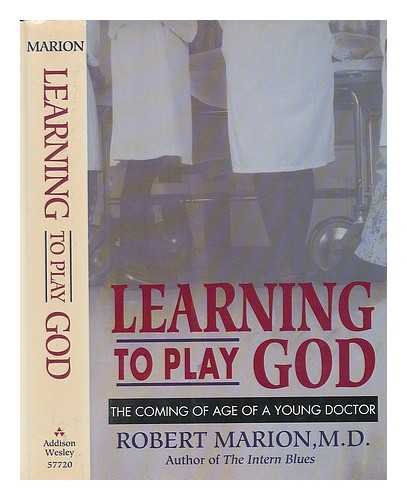
Twenty real life stories offer insight into the training that doctors must experience in order to become licensed, and offers suggestions on maintaining one's humanity and idealism throughout the process
Reviews
YA-- A no-frills look at medical training that places the process--from acceptance into medical school through internship and residency--in a clear and sobering light. Marion explains technical terms so that readers become as involved in patients' progress as if they were part of the medical team. His easy, engaging style, plus the detective element that is part of diagnosis, makes this book impossible to put down. The author condemns the system that requires interns to put in 100-120 hour work weeks, which robs patients of quality care while stripping eager, idealistic medical people of their humanity and compassion. He advocates change, but his love of the profession, his personal warmth, and his skill come through in this narrative. He does not want to discourage prospective doctors, but he does want to make their paths more humane.
- Judy Sokoll, Fairfax County Public Library, VA
Copyright 1992 Reed Business Information, Inc.
The frustration, anger and sheer exhaustion pervading the author's medical education from 1973 to 1981 have not diminished with the passing of time, as Marion ( The Boy Who Felt No Pain ) makes amply clear in this reasoned, vivid recollection. Sparing himself no more than others, he reviews the toll exacted on his ideals and emotional resources by his years at Albert Schweitzer School of Medicine in New York City, during his internship at Boston Medical Center--described as demeaning as well as grueling--and residency in pediatrics back in New York at Jonas Bronck Hospital, affiliated with Schweitzer, where the author is now an associate professor and member of the admissions committee. Framed by suggestions for clinical and classroom reform, the body of the book is an immediately felt, year-by-year account of Marion's experiences--from the soul- and mind-numbing 36-hour shifts in emergency rooms of urban hospitals to the elation of an on-target diagnosis or a child's awakening from a months-long coma. With sharp characterization and no sentimentality, Marion presents a persuasive case for humanizing the education of our physicians.
Copyright 1991 Reed Business Information, Inc.
Marion, pediatrician and author (The Boy Who Felt No Pain, 1990; The Intern Blues, 1989; the novel Born Too Soon, 1985) tells tales out of school--and out of internship and residency- -dramatizing his thesis that the education of doctors is virtually guaranteed to produce competent but insensitive physicians. According to Marion, most students entering medical school are idealistic and eager to help others. As third-year students, however, they serve as clinical clerks to overworked, burned-out, and callous interns. And once they become interns themselves they too become sleep-deprived and psychologically damaged, often blaming patients for their situation. As residents, young doctors have even more power and responsibility, and the uncaring attitude they developed as interns can have even greater impact on patient care. That this attitude may well remain once their training is finished is clear from Marion's portraits of various older physicians who figure in his stories. Occasionally a story seems designed more to hold a flattering light up to the author than to shed light on the problems inherent in our present system for training doctors, but all are engrossing. Marion knows how to spin a tale, including enough medical detail to lend veracity to his account yet not overwhelm the lay reader. In an epilogue, he makes his own brief recommendations for revamping the education of doctors; after exposure to the medical mind-set presented in his stories, a question remains as to whether his recommendations go far enough. Absorbing stories that reveal the need for major reforms in how doctors are trained. -- Copyright ©1991, Kirkus Associates, LP. All rights reserved.
Drawing on his own experience, Marion tells why most doctors start their medical training as idealists and compassionate and end up caring "little about anything other than their own incomes and lifestyles." (If you want to know what happens after their training, read Peter Skrabanek and James McCormick's Follies and Fallacies in Medicine , LJ 9/15/90). While much of the nastiness Marion describes is fact, as a former medical admissions officer this reviewer would argue that many doctors start out already money-mad and that patients encourage them by demanding everything no matter what the cost or appropriateness. Marion's book is weakened by his repetitiveness, but it will probably be in demand in popular medical collections.
- Edward R. Pinckney, Beverly Hills, Cal.
Copyright 1991 Reed Business Information, Inc.
"About this title" may belong to another edition of this title.