Synopsis
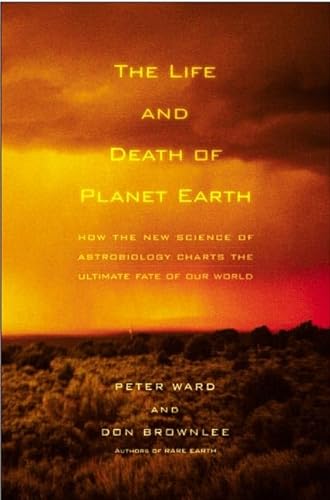
In a landmark work of science two distinguished scientists offer a vivid narrative describing the second half of the life of our planet
Planet Earth is middle-aged. Science has worked hard to piece together the story of the evolution of our world up to this point, but only recently have we developed the understanding and the tools to describe the entire life cycle of a planet-of our planet.
Peter Ward and Don Brownlee, a geologist and an astronomer respectively, are in the vanguard of the new field of astrobiology. Combining their knowledge of how the critical sustaining systems of our planet evolve through time with their understanding of how stars and solar systems grow and change throughout their own life cycles, the authors tell the story of the second half of Earth's life. The process of planetary evolution will essentially reverse itself; life as we know it will subside until only the simplest forms remain. Eventually, they too will disappear. The oceans will evaporate, the atmosphere will degrade, and, as the sun slowly expands, Earth itself will eventually meet a fiery end.
In this masterful melding of groundbreaking research and captivating, eloquent science writing, Ward and Brownlee provide a comprehensive portrait of Earth's life cycle that allows us to understand and appreciate how the planet sustains itself today, and offers us a glimpse of our place in the cosmic order.
About the Author
Peter Ward and Don Brownlee are the co-authors of the acclaimed and bestselling Rare Earth. Ward is a professor of geological science and zoology at the University of Washington and the author of nine other books, including Future Evolution, The Call of Distant Mammoths, and The End of Evolution, which was a finalist for the Los Angeles Times Book Prize. Brownlee is a professor of astronomy at the University of Washington.
"About this title" may belong to another edition of this title.