Synopsis
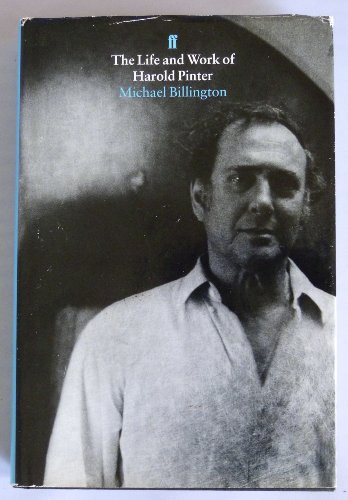
Harold Pinter is our foremost living dramatist; and in this ground-breaking book - the first authorized biographical study - Michael Billington examines Pinter's work in the context of his life. Pinter's plays, including such acknowledged masterpieces as The Caretaker and The Homecoming, are subjected to close textual scrutiny and are seen to spring from a mixture of experience, memory and the unfettered poetic imagination. Billington's book also demolishes the myth that Pinter's political commitment is either belated or aesthetically detrimental; the dramatist is seen from the outset as a vehement opponent of authoritarian structures.
Reviews
A smart, absorbing blend of criticism and biography that demythologizes the writings of Britain's premier postwar dramatist. London theater critic Billington draws on interviews with Pinter (born 1930), his friends, and his co-workers to explore the links between the writer's personal experience and such plays as The Birthday Party and Betrayal; screenplays, including The Servant and Remains of the Day; and numerous television and radio dramas. This penetrating book discovers a good deal of autobiography in works previously thought to be forbiddingly abstract and philosophical. Billington argues persuasively, for example, that the frequent portraits of male camaraderie in Pinter's plays are based on the tightly knit group of boys with whom he formed lifelong friendships during their youth in London's Jewish East End. The critic's careful explication also convincingly refutes the idea that Pinter made an abrupt shift in the 1980s to become a ``protest'' playwright; Billington shows that the early works, which unflinchingly depict personal struggles for power, were just as politically charged, albeit more covertly. Some points are debatable, such as the contention that Pinter takes an essentially feminist view of male/female conflicts, and Billington tends to make all his points rather repetitiously. The book deals fairly evenhandedly with the combative playwright's private life, although his first marriage, to actress Vivien Merchant, is described almost exclusively from Pinter's point of view. (His second wife, historian Antonia Fraser, gets gentler treatment.) These are forgivable faults in a generally solid piece of research combined with a thoughtful analysis of Pinter's place in contemporary theater. Billington's knowledge of world dramatic literature and theatrical history puts his American colleagues to shame. Pinter's work has been obfuscated as often as illuminated by critics over the past 40 years; Billington combines intelligence with accessibility to create a fine theater book for the general reader. -- Copyright ©1997, Kirkus Associates, LP. All rights reserved.
Billington's exhaustive critical biography of one of Britain's major modern playwrights is long on literary analysis and shorter on biography. Billington discusses nearly all Pinter's major plays at length, from his earliest forays (e.g., The Room, The Dwarfs) to the famous Birthday Party and The Homecoming and beyond. The book's most fascinating sections explore the sources, literary and biographical, of Pinter's evocative, cryptic plays. Billington's analysis relies heavily on the hidden (and sometimes not so hidden) political messages in Pinter's work, and they are there, although if the plays were only complaints against authoritarian regimes, they would be a lot less interesting. As hinted above, Billington's portrait of Pinter feels incomplete, especially appearing, as it does, side by side with his fine literary scholarship. You can't help wondering how much more Billington might have turned up about the man if Pinter were not still a living force to be reckoned with in the English-speaking theater. Jack Helbig
"About this title" may belong to another edition of this title.